





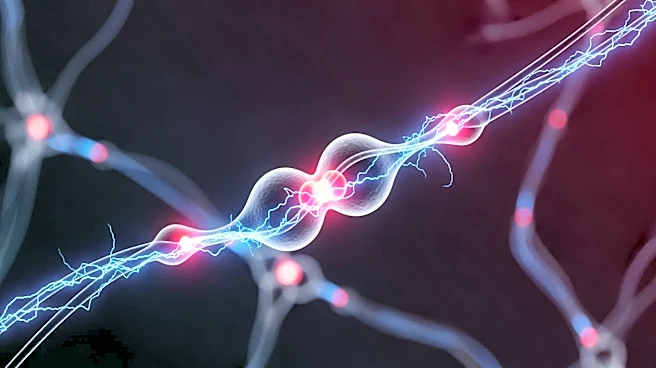


The concept of memory consolidation has a rich history, with its roots tracing back to ancient times. Over the centuries, our understanding of how memories are formed and stabilized has evolved significantly. From early observations to modern scientific research, the journey of memory consolidation theory is a testament to the progress of neuroscience.
Early Observations and Theories
The idea of memory consolidation can be traced back to the writings of the Roman teacher Quintillian,
who noted that memory improves over time. This early observation laid the groundwork for future exploration into the nature of memory. In the late 19th century, German researchers Müller and Alfons Pilzecker formally introduced the idea of consolidation, proposing that memory takes time to fixate and stabilize.
These early theories suggested that memories are not immediately permanent but require a period of consolidation to become stable. This concept challenged the prevailing notion that memories were instantly formed and highlighted the dynamic nature of memory processes.
Advances in the 20th Century
The mid-20th century saw significant advancements in the study of memory consolidation, particularly through the investigation of anterograde amnesia. The case of Henry Molaison, formerly known as patient H.M., became a landmark in memory studies. After undergoing surgery to remove parts of his hippocampus, Molaison experienced severe memory impairment, sparking interest in the role of the hippocampus in memory consolidation.
Research into other patients with similar conditions further supported the idea that the medial temporal lobe (MTL) plays a crucial role in memory consolidation. These findings helped establish modern theories of memory consolidation and its underlying neural mechanisms.
Modern Understanding and Ongoing Research
Today, memory consolidation is understood as a complex process involving both synaptic and systems consolidation. Synaptic consolidation occurs rapidly at the cellular level, while systems consolidation involves the gradual reorganization of memories across brain regions. The role of sleep in memory consolidation has also become a significant area of research, with studies suggesting that sleep supports the stabilization and reorganization of memories.
Despite these advancements, memory consolidation remains an area of ongoing research and debate. The dynamic nature of memory, particularly the concept of reconsolidation, continues to intrigue scientists. As our understanding of the brain and its processes deepens, the study of memory consolidation will undoubtedly continue to evolve, offering new insights into the mysteries of human memory.