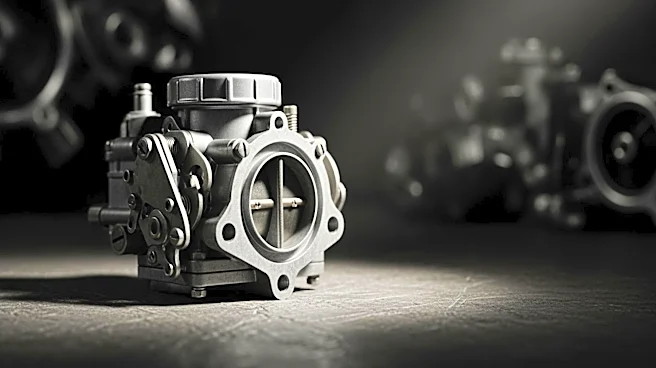




The carburetor, a device once essential to gasoline engines, has a rich history marked by innovation and eventual decline. Initially developed to mix air and fuel for internal combustion engines, carburetors were a staple in automotive engineering until the late 20th century. This article explores the carburetor's journey from its inception to its replacement by modern fuel injection systems.
Early Developments and Innovations
The concept of the carburetor dates back to the 19th century,
with American engineer Samuel Morey receiving a patent for a "gas or vapor engine" in 1826. This early design mixed turpentine and air, laying the groundwork for future developments. By the late 1800s, German engineers Wilhelm Maybach and Gottlieb Daimler introduced the first float-fed carburetor, which used an atomizer nozzle to mix fuel and air more effectively.
As the automotive industry grew, so did the need for more efficient fuel delivery systems. The early 20th century saw significant advancements, including the introduction of the SU carburettor, a constant-depression carburetor that became widely used in British vehicles. This design featured a variable venturi controlled by a sliding piston, allowing for more precise fuel metering.
The Golden Age of Carburetors
Carburetors reached their peak in the mid-20th century, becoming the standard for fuel delivery in most gasoline engines. In the United States, carburetors were the primary method of fuel delivery until the late 1980s. During this period, various designs emerged, including two-barrel and four-barrel carburetors, which offered improved performance for high-powered engines.
The versatility of carburetors made them popular in a wide range of applications, from automobiles to motorcycles and even aircraft. Notably, the SU carburettor was used in iconic British cars like the Jaguar and Aston Martin, as well as in aircraft engines such as the Rolls-Royce Merlin.
The Shift to Fuel Injection
Despite their widespread use, carburetors began to face competition from fuel injection systems in the late 20th century. Fuel injection offered several advantages, including better fuel efficiency, reduced emissions, and improved engine performance. By the 1990s, fuel injection had largely replaced carburetors in cars and trucks, although carburetors remained in use for small engines and certain motorsport applications.
The transition was driven by stricter environmental regulations and the need for more precise fuel control. In motorsports, NASCAR was one of the last holdouts, using carburetors until 2011 before switching to electronic fuel injection. Today, carburetors are mostly found in classic cars and small engines, serving as a reminder of a bygone era in automotive engineering.