



The concept of the Triple Goddess is a significant element in many Neopagan traditions, representing a deity with three distinct aspects: the Maiden, the Mother, and the Crone. This triune figure is often associated with the phases of the moon and stages of a woman's life. While rooted in ancient beliefs, the modern interpretation of the Triple Goddess has been shaped by various scholars and writers, most notably in the 20th century. This article
delves into the contemporary understanding and significance of the Triple Goddess in Neopaganism.
The Influence of Robert Graves
Robert Graves, a poet and mythographer, played a pivotal role in popularizing the modern concept of the Triple Goddess. In his works, such as "The White Goddess" and "The Greek Myths," Graves explored the idea of a universal goddess figure that embodies the Maiden, Mother, and Crone. He speculated on the ancient worship of this goddess, drawing from various mythologies and scholarly interpretations of his time. Graves' portrayal of the Triple Goddess as a muse for true poetry and a symbol of feminine power has had a lasting impact on Neopagan beliefs.
Graves' interpretation was heavily influenced by the work of Jane Ellen Harrison and other Cambridge Ritualists, who explored the existence of female trinities in ancient cultures. Although Graves' theories have been criticized for their lack of historical evidence, they continue to resonate with many Neopagans who see the Triple Goddess as a symbol of female empowerment and spiritual connection.
The Role of Marija Gimbutas
Another influential figure in the development of the Triple Goddess concept is archaeologist Marija Gimbutas. She argued for the ancient worship of a universal Triple Goddess in European cultures, suggesting that this deity was central to a matriarchal society that existed before the rise of patriarchal Indo-European cultures. Gimbutas' theories, while controversial, have been embraced by some Neopagan groups and feminist movements as a narrative of female empowerment and historical significance.
Gimbutas' work has been criticized for its generalization and lack of concrete evidence, but it has nonetheless contributed to the modern understanding of the Triple Goddess. Her ideas have inspired a reevaluation of ancient symbols and myths, encouraging a reinterpretation of historical narratives through a feminist lens.
The Triple Goddess in Contemporary Practice
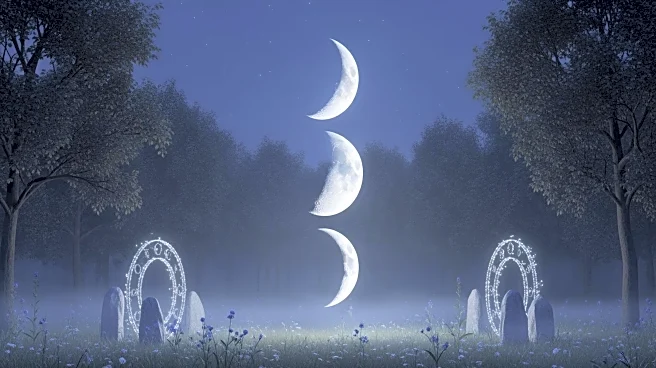
In contemporary Neopaganism, the Triple Goddess is often revered as a symbol of the cyclical nature of life and the interconnectedness of all things. The Maiden represents new beginnings and youthful enthusiasm, the Mother embodies fertility and nurturing, and the Crone symbolizes wisdom and the end of life. These aspects are often associated with the waxing, full, and waning phases of the moon, respectively.
Many Neopagan traditions, such as Wicca, incorporate the worship of the Triple Goddess into their rituals and spiritual practices. This deity is seen as a representation of the divine feminine, offering a way for practitioners to connect with their own inner strength and intuition. The Triple Goddess serves as a reminder of the power and resilience inherent in the female experience, making her a central figure in modern Neopagan spirituality.