




Centella asiatica, commonly known as gotu kola, is a fascinating plant with unique botanical features. This perennial herb belongs to the Apiaceae family and is native to tropical regions across Africa, Asia, Australia, and the western Pacific islands. Known for its culinary and medicinal uses, Centella asiatica is characterized by its distinctive physical attributes that contribute to its widespread cultivation and use.
Plant Structure and Growth
Centella asiatica is a herbaceous
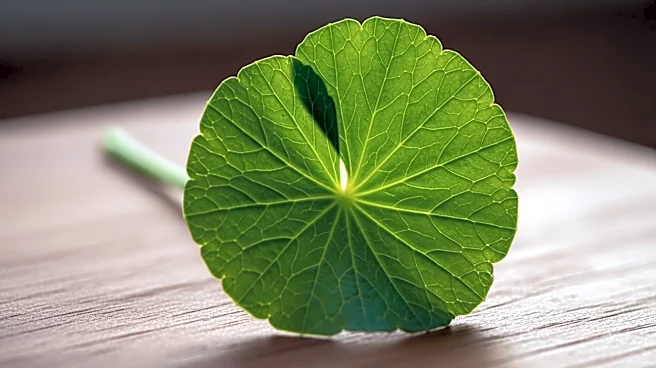
plant with slender, creeping stolons that connect individual plants. These stolons are green to reddish-green, providing a vibrant appearance. The plant's leaves are long-stalked and green, with a rounded apex and a smooth texture. The leaf blade features palmately netted veins, and the leaf stalk broadens at the base into a leaf-sheath. The rootstock consists of cream-colored rhizomes that grow vertically down, covered with root hairs.
The flowers of Centella asiatica are small, white or crimson, and form in rounded bunches near the soil surface. Each flower is partly enclosed in two green bracts and is hermaphroditic, containing five to six corolla lobes, five stamens, and two styles. The fruit is densely reticulate, distinguishing it from other species like Hydrocotyle, which have smooth or ribbed fruit.
Ecological Adaptations
Centella asiatica thrives in temperate and tropical swampy areas, making it indigenous to regions such as the Indian subcontinent, Southeast Asia, parts of Australia, and the Southeastern United States. As an aquatic plant, it is sensitive to biological and chemical pollutants in water, which can be absorbed into the plant. Despite its preference for swampy areas, it can be cultivated in drier soils like sandy loam, provided they are watered regularly.
The plant's adaptability has led to its classification as a highly invasive species in several Pacific islands, where it poses a risk to native flora. It contributes to the decline of Hawaiian sedge species and is considered invasive in areas like the Chagos Archipelago, Seychelles, Hawaii, and French Polynesia.
Chemical Composition
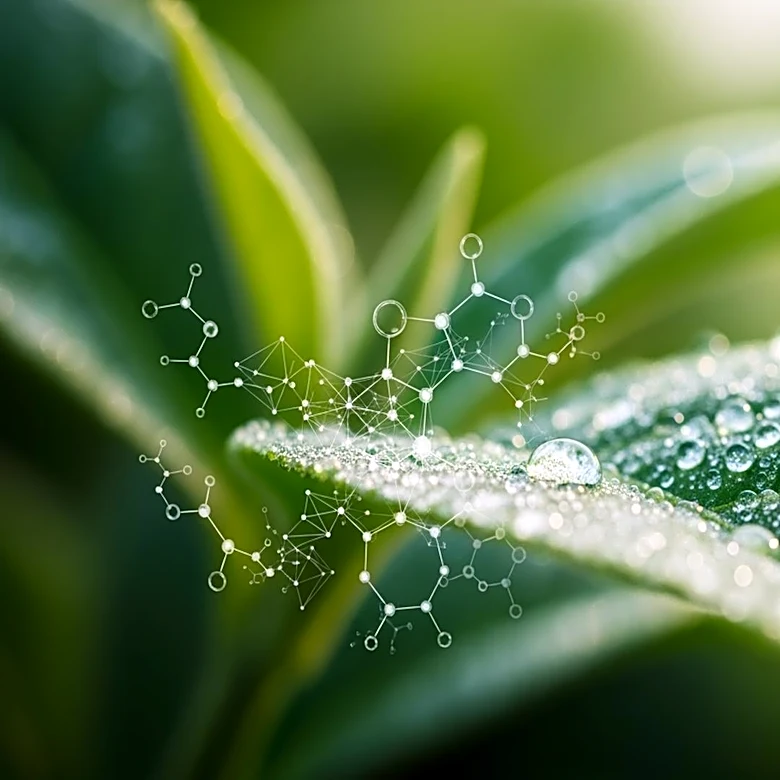
Centella asiatica contains a variety of phytochemicals, including pentacyclic triterpenoids and their trisaccharide glycosides. Notable compounds include asiatic acid, brahmic acid, and their derivatives, asiaticoside and brahmoside. The plant also contains centellose and centelloside, with approximately 124 chemical compounds identified. These compounds are believed to contribute to the plant's traditional medicinal uses, although clinical efficacy and safety remain unproven.
The genetic makeup of Centella asiatica includes diploid, tetraploid, or hexaploid individuals, with a chromosome-level genome published in 2021. This genetic information provides insights into the plant's ability to produce secondary metabolites, which are used in traditional medicine.