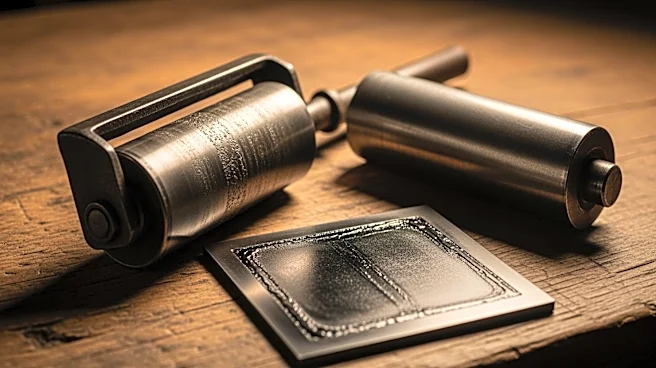








William Bullock, born in 1813 in Greenville, New York, was an American inventor whose contributions to the printing industry were both groundbreaking and tragic. Known for his improvements to the rotary printing press, Bullock's innovations significantly increased the speed and efficiency of printing, leaving a lasting impact on the industry. Despite his success, Bullock's life was marked by personal challenges and a tragic end, as he was killed by his own invention.
Early Life and Career
Bullock's early life was shaped by adversity. Orphaned at a young age, he was raised by his brother and developed a keen interest in mechanics through his fascination with books. By the age of 21, Bullock was running his own machinery shop in Savannah, Georgia, where he invented a shingle-cutting machine. Unfortunately, his business failed due to marketing challenges, but this setback did not deter him from pursuing his passion for invention.
After moving back to New York, Bullock continued to innovate, designing devices such as a cotton and hay press, a seed planter, and a lathe cutting machine. His invention of a grain drill earned him a prize from the Franklin Institute in 1849, showcasing his talent and dedication to improving industrial processes.
Contributions to the Printing Industry
Bullock's most significant contribution came with his improvements to the rotary printing press. Originally invented by Richard March Hoe, the rotary press was transformed by Bullock's enhancements in 1863. His version allowed for continuous rolls of paper to be automatically fed through the press, eliminating the need for manual feeding. This innovation not only increased the speed of printing but also improved the quality and efficiency of the process.
Bullock's press was capable of printing up to 12,000 sheets per hour, a number that later increased to 30,000 sheets with further improvements. The press printed on both sides, folded the paper, and cut sheets with precision, revolutionizing the way newspapers and other printed materials were produced.
Tragic End and Legacy
Despite his success, Bullock's life ended tragically. In 1867, while making adjustments to one of his presses for the Philadelphia Public Ledger newspaper, Bullock's leg was crushed by the machine. The injury led to gangrene, and he died during an operation to amputate his leg. Bullock's death was a stark reminder of the risks associated with industrial innovation.
Bullock's legacy lives on through his contributions to the printing industry. His improvements to the rotary press paved the way for modern printing techniques, and his story serves as a testament to the impact of innovation, even in the face of personal tragedy.