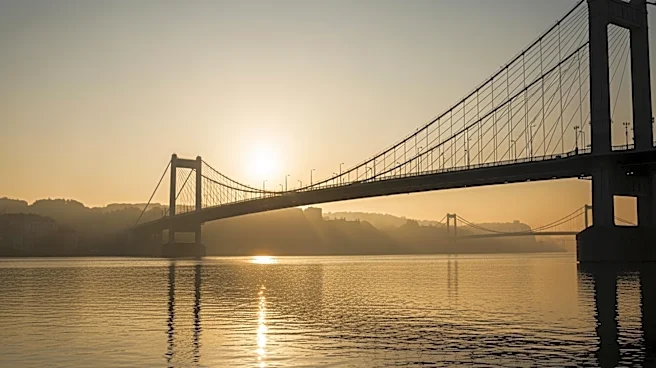

The Bronx–Whitestone Bridge is a significant piece of infrastructure in New York City, connecting the boroughs of Queens and the Bronx. Opened in 1939, this suspension bridge has undergone several changes
and improvements over the years. This article delves into the historical development of the bridge, highlighting key events and modifications that have shaped its current form.
Initial Construction and Opening
The Bronx–Whitestone Bridge was constructed under the initiative of the renowned city planner Robert Moses. It was designed to provide access to the 1939 New York World's Fair held in Flushing Meadows Park and to serve the then North Beach Airport, now known as LaGuardia Airport. The bridge was also intended to alleviate traffic on the Triborough Bridge, offering a direct connection between Long Island and the mainland without the need to traverse another island.
Construction of the bridge began on June 1, 1937, and it was completed in a remarkably short period, opening to traffic on April 29, 1939. Initially, the bridge featured four lanes, but it was later expanded to accommodate six lanes in 1946 to handle increasing traffic demands.
Design and Structural Changes
The design of the Bronx–Whitestone Bridge was the work of Othmar Ammann, a prominent bridge engineer. The bridge's design was similar to that of the Tacoma Narrows Bridge, which famously collapsed in 1940. To prevent a similar fate, the Bronx–Whitestone Bridge was reinforced with additional cables. In 1968, the bridge was temporarily closed after a storm caused significant vertical movement, prompting further structural enhancements.
In 1943, the bridge's sidewalks were removed to make way for more vehicular lanes, reflecting the growing emphasis on motorized traffic. This change marked a shift in the bridge's usage, as pedestrians and cyclists were no longer able to cross it on foot or by bike.
Integration into the Interstate System
In the early 1960s, the Bronx–Whitestone Bridge became part of the Interstate Highway System, specifically Interstate 678. This integration required modifications to the bridge's approaches to meet interstate standards. The roads leading to the bridge, originally designed as parkways, were upgraded to highways, further cementing the bridge's role as a critical transportation link in the region.
The bridge is owned by the city of New York and managed by MTA Bridges and Tunnels. It remains a toll bridge, with fees collected to support its maintenance and operation. Over the years, the Bronx–Whitestone Bridge has evolved to meet the changing needs of New York City's transportation network, maintaining its status as a vital artery for commuters and travelers alike.