
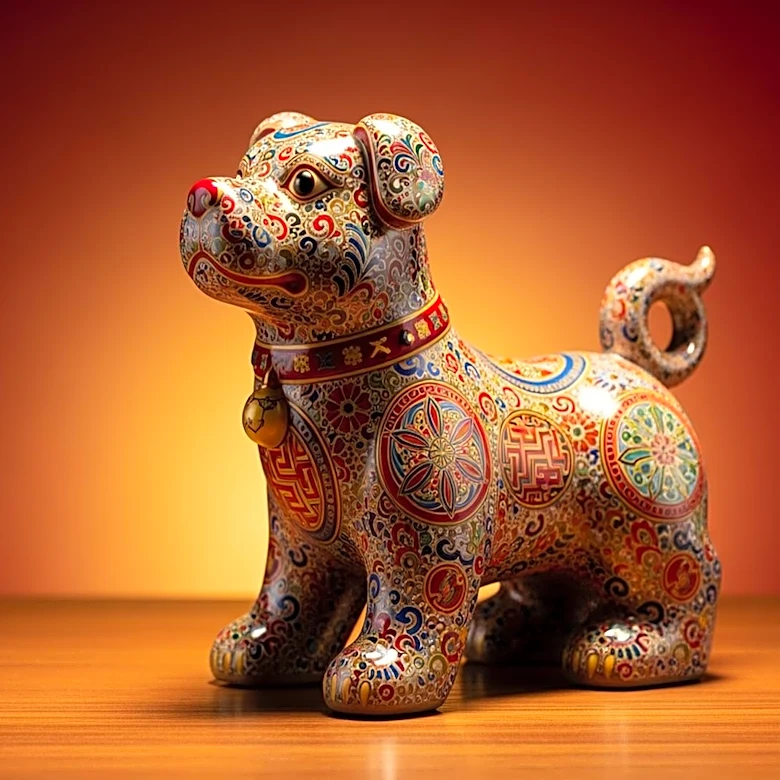



In the Chinese zodiac, the Year of the Dog is not only defined by its position in the 12-year cycle but also by its association with the five elements: Metal, Water, Wood, Fire, and Earth. These elements play a crucial role in shaping the characteristics and cultural significance of each Year of the Dog. This article explores how these elements influence the Year of the Dog and what they mean for those born under this sign.
The Elemental Cycle and the Dog
The Chinese zodiac operates
on a 60-year cycle, where each animal sign is paired with one of the five elements. This means that each Year of the Dog is associated with a different element, creating a unique combination that influences the traits and characteristics of that year. For instance, the Metal Dog years include 1910 and 2030, while the Water Dog years are 1922 and 2042.
Each element brings its own qualities to the Year of the Dog. Metal is associated with strength and determination, Water with adaptability and intuition, Wood with growth and creativity, Fire with passion and energy, and Earth with stability and reliability. These elemental influences add depth to the understanding of the Dog's role in the zodiac, providing a more nuanced view of its characteristics.
Characteristics of Elemental Dogs
The elemental association of each Year of the Dog affects the personality traits attributed to people born in those years. A Metal Dog, for example, might be seen as more resolute and strong-willed, reflecting the qualities of the Metal element. In contrast, a Water Dog could be perceived as more flexible and intuitive, embodying the adaptive nature of Water.
Wood Dogs are often thought to be creative and growth-oriented, while Fire Dogs are seen as passionate and energetic. Earth Dogs, on the other hand, are considered stable and reliable, mirroring the grounding influence of the Earth element. These characteristics are not just abstract concepts; they are deeply embedded in cultural beliefs and practices, influencing how people view and interact with those born under each elemental Dog sign.
Cultural and Philosophical Implications
The interplay between the Dog and the five elements is not just a matter of personality traits; it also has cultural and philosophical implications. In Chinese philosophy, the elements are seen as fundamental forces that shape the universe and influence human life. The association of these elements with the Dog adds a layer of meaning to its zodiac sign, connecting it to broader philosophical concepts.
This connection is reflected in cultural practices and celebrations. For example, during the Year of the Dog, people might engage in activities that honor the traits associated with the specific element of that year. These practices highlight the importance of the elements in understanding the Dog's role in the zodiac and its impact on cultural traditions.
In conclusion, the five elements play a vital role in shaping the Year of the Dog, influencing its characteristics and cultural significance. By understanding these elemental associations, we gain a deeper appreciation for the complexity and richness of the Chinese zodiac.