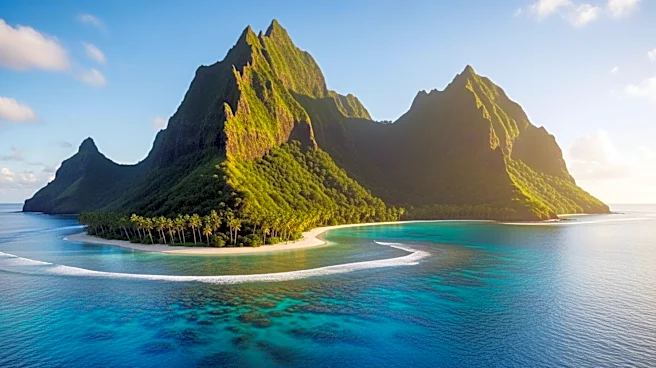







American Samoa, a U.S. territory in the South Pacific, is known for its unique geographical features and strategic location. This article delves into the geographical aspects of American Samoa, highlighting its volcanic origins, mountainous terrain, and tropical climate. Understanding these features provides insight into the natural beauty and challenges faced by this island territory.
Volcanic Origins and Terrain
American Samoa is part of the Samoan Islands, an archipelago in
the central South Pacific. The islands are primarily volcanic in origin, which contributes to their rugged and mountainous terrain. The largest island, Tutuila, is home to Pago Pago, the capital, and features Matafao Peak, one of the highest points in the territory. The volcanic activity has shaped the landscape, creating a mix of lush tropical forests and dramatic mountain peaks.
The volcanic nature of the islands is evident in their formation. The Samoa island chain may have been formed by the activity of the Samoa hotspot, a mantle plume that creates volcanic islands as the Pacific tectonic plate moves over it. This process has resulted in a series of islands that generally lie in a straight east-to-west line. However, some characteristics of the islands, such as recent volcanic activity on both the eastern and western ends, present an enigma to scientists studying their formation.
Strategic Location in the Pacific
American Samoa's location in the South Pacific is significant both geographically and politically. The islands are approximately 800 kilometers from Fiji, 530 kilometers from Tonga, and 4,000 kilometers from Hawaii. This strategic position has historically made American Samoa an important location for navigation and trade routes across the Pacific.
The islands' proximity to the International Date Line has also played a role in their history. In 1892, the Samoan islands shifted to the eastern side of the International Date Line to align with American trade partners. This change was reversed in 2011 when the independent state of Samoa shifted back to the western side to align with Australia and New Zealand, its primary trading partners.
Climate and Natural Challenges
The climate of American Samoa is tropical, characterized by a rainy season from November to April. This climate supports the lush tropical forests that cover much of the islands. However, the region is also prone to tropical cyclones, particularly between December and March, which can pose significant challenges to the inhabitants.
In addition to cyclones, the islands are susceptible to earthquakes and tsunamis due to their location near the Tonga Trench. The 2009 Samoa earthquake and tsunami, which resulted in significant loss of life and property, highlighted the vulnerability of the islands to natural disasters. These events underscore the importance of understanding and preparing for the geographical and climatic challenges faced by American Samoa.