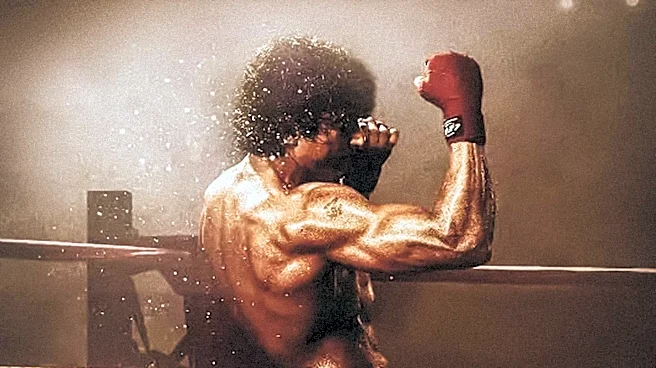








Gerry Cooney's path to the boxing ring was marked by determination and a series of impressive victories that established him as a top contender in the heavyweight division. Born into a blue-collar Irish-Catholic family on Long Island, Cooney was encouraged by his father to pursue a career in boxing. His journey from amateur to professional fighter was characterized by his powerful left hook and imposing size, which made him a formidable opponent in the ring.
Early Career and Rise to Prominence
Cooney's amateur career was impressive, with victories in international tournaments in England, Wales, and Scotland, as well as two New York Golden Gloves Championships. His amateur record of 55 wins and 3 losses set the stage for his professional debut in 1977. Cooney quickly gained attention with a series of knockout victories, showcasing his powerful left hook and aggressive fighting style.
By 1980, Cooney was being featured on national television, and his victories over one-time title challengers Jimmy Young and Ron Lyle further solidified his reputation as a top contender. His knockout of former world heavyweight champion Ken Norton in just 54 seconds at Madison Square Garden tied a record for the quickest knockout in a main event at the venue, further boosting his profile.
The Road to Holmes
Despite his success, Cooney's management team was cautious, opting to preserve his undefeated record by avoiding risky fights. This strategy paid off, as Cooney became the number one contender for the WBC heavyweight title, setting the stage for his highly anticipated match against Larry Holmes.
The fight with Holmes was not just a sporting event but a cultural phenomenon, with racial overtones that Cooney himself did not endorse. The bout was one of the biggest closed-circuit and pay-per-view productions in history, drawing attention from around the world. Cooney's potential to become the first white world heavyweight champion in over two decades added to the intrigue and pressure surrounding the fight.
Legacy and Impact
Although Cooney did not win the fight against Holmes, his performance was commendable. He showed resilience and skill, and the fight was competitive until the 13th round when his trainer stepped in to stop the match. Despite the loss, Cooney's career remained notable for his powerful punching ability and his role in one of the most talked-about fights in boxing history.
After the fight, Cooney continued to box, though he never again reached the same level of prominence. His journey to the ring and his performance against Holmes remain a testament to his skill and determination as a fighter. Cooney's career is a reminder of the challenges and triumphs that define the world of professional boxing.