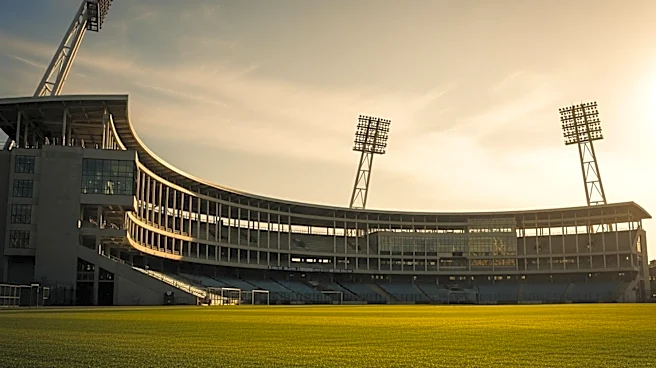

Balaídos Stadium, located in Vigo, Spain, has a rich history that dates back to its inception in the early 20th century. As the home of La Liga club Celta Vigo, the stadium has undergone several transformations
to become the modern facility it is today. This article explores the key milestones in the stadium's development, from its initial construction to its recent renovations.
Construction and Inauguration
The journey of Balaídos Stadium began in September 1924 when a group of local businessmen purchased a 75,000 square meter plot of land for its construction. The first major task was to divert the Lagares river, a significant undertaking that set the stage for the stadium's development. Two years later, the businessmen established the Stadium de Balaídos, S.A. company to oversee the construction work. The architectural design was entrusted to Jenaro de la Fuente, who played a pivotal role in shaping the stadium's initial structure.
Balaídos was officially inaugurated on December 30, 1928. The opening ceremony was marked by a blessing from Father Faustino Ande, the archpriest of Fragoso. The inaugural match featured the home team, Celta Vigo, against the Basque team Real Unión. The event was memorable, with Celta Vigo's Graciliano scoring the first goal in a decisive 7-0 victory. This match set the tone for the stadium's future as a central hub for football in Vigo.
Renovations for the 1982 FIFA World Cup
In preparation for the 1982 FIFA World Cup, Balaídos Stadium underwent significant renovations. The Rio stand was completely rebuilt, and a new Gol end was added to enhance the stadium's capacity and facilities. Additionally, the Tribuna and Marcador stands were renovated to meet the standards required for hosting international matches. These upgrades were crucial in ensuring that Balaídos could accommodate the influx of fans and teams during the World Cup.
The stadium successfully hosted three group matches during the tournament, including a notable match between Italy and Poland. These events not only showcased the stadium's improved infrastructure but also solidified its reputation as a premier venue for international football.
Modern Upgrades and Continued Use
Following Celta Vigo's successful 2002-2003 La Liga season, the stadium faced challenges in meeting UEFA's standards for hosting Champions League fixtures. However, local authorities funded the necessary upgrades, allowing Balaídos to continue serving as Celta's home ground. In 2015, a comprehensive reconstruction project began, focusing on modernizing the stadium's four stands.
The first phase involved moving the Tribuna (North Stand) closer to the pitch and constructing new changing rooms and private boxes. The Rio (South Stand) was refurbished with new media facilities and a roof. By 2018, these renovations were completed, ensuring that Balaídos remained a state-of-the-art facility. The Marcador (East Stand) was fully reconstructed by 2023, further enhancing the stadium's capacity and amenities.
Today, Balaídos Stadium stands as a testament to the enduring legacy of football in Vigo, continuing to host Celta Vigo's home matches and various international events.