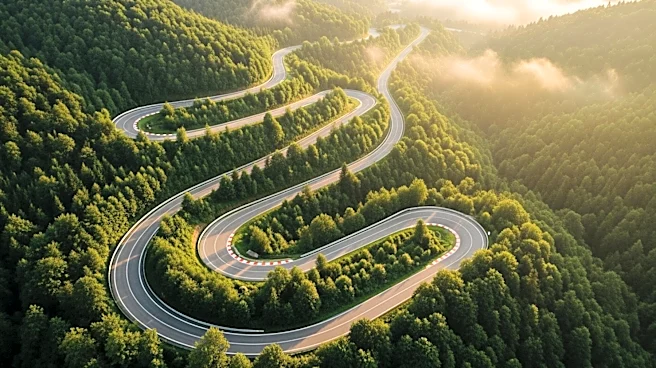





The Nürburgring Nordschleife, often referred to as "The Green Hell," is a legendary racing circuit located in Germany. Known for its challenging layout and rich history, the track has undergone significant changes since its inception in 1927. This article delves into the historical evolution of the Nordschleife, highlighting key milestones and transformations that have shaped its current form.
The Early Years: 1927-1939
The Nürburgring Nordschleife was inaugurated in 1927, featuring
a combined track length of 28.265 km, which included the Nordschleife and the Südschleife. The circuit quickly gained a reputation for its complexity and difficulty, with early races showcasing the prowess of drivers like Rudolf Caracciola. During this period, the track was characterized by its long laps and challenging weather conditions, which often varied across different sections of the circuit.
In the late 1920s, the German Grand Prix was held on the Nordschleife, with cars covering distances of up to 508 km. Despite the challenges, the track became a favorite among drivers and fans alike, setting the stage for its future as a premier racing venue. The Nordschleife's layout remained largely unchanged until 1966, with improvements made to the track surface and safety features over time.
Post-War Developments: 1951-1982
After World War II, the Nürburgring Nordschleife faced significant damage and neglect. However, by 1951, major international racing returned to the track, marking the beginning of a new era. The circuit was now lined with tall hedges and trees, earning its nickname "Green Hell." During this period, the track saw the emergence of sports car and touring car events, alongside traditional Grand Prix races.
In 1967, the Hohenrain chicane was added to reduce entrance speeds to the Start/Finish straight, reflecting ongoing efforts to enhance safety. Despite these changes, the Nordschleife remained a formidable challenge, with lap times continuing to improve as cars became faster and more advanced. By 1982, the track had been resurfaced, and Armco barriers replaced the hedges, further increasing speeds and safety.
Modern Era: 1983-Present
The early 1980s marked a turning point for the Nürburgring Nordschleife, as the original start/finish loop was demolished to make way for a new Grand Prix track. This modern circuit opened in 1984, allowing the Nordschleife to host events independently or in combination with the new track. The 24 Hours Nürburgring became a staple event, utilizing various track variants.
Today, the Nordschleife continues to be a popular venue for racing and testing, attracting manufacturers and enthusiasts from around the world. Its rich history and challenging layout ensure its place as one of the most iconic circuits in motorsport history, with ongoing developments maintaining its status as a premier racing destination.