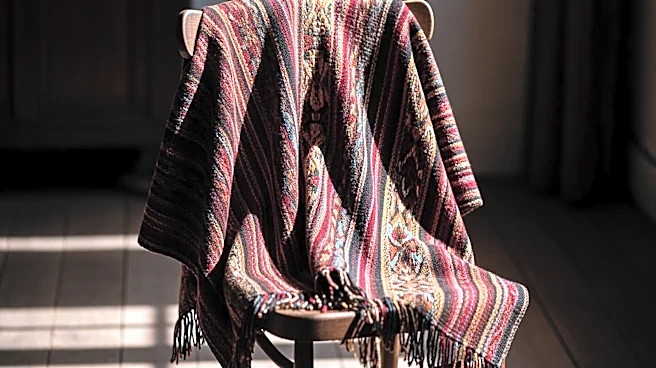









The poncho, a simple yet versatile garment, has a rich history that spans across the Americas. Originating from indigenous cultures, it has been used for centuries as a practical solution for warmth and protection against the elements. This article delves into the historical journey of the poncho, highlighting its cultural significance and evolution over time.
Origins and Early Use
The poncho's roots can be traced back to pre-Hispanic times, where it was widely used by
Native American peoples in regions such as the Andes, Greater Nicoya, Patagonia, and the Valley of Mexico. These areas, now part of countries like Argentina, Bolivia, and Mexico, saw the poncho as an essential garment for warmth. Traditionally made from woolen fabric, the poncho served as a blanket-like covering, providing comfort in the harsh climates of these regions.
The design of the poncho is straightforward, consisting of a large rectangular piece of fabric with a central opening for the head. This simplicity allowed it to be easily crafted and adapted to various needs. Over time, the poncho became a symbol of cultural identity, with different regions developing their own styles and variations.
Military Adoption and Evolution
The poncho's practicality was recognized by military forces, leading to its adoption in the 1850s by irregular U.S. military units operating on the Western Plains. These early military ponchos were made from gutta percha muslin, a waterproof cloth that provided protection against rain. During the American Civil War, ponchos were used not only as rain gear but also as ground sheets for sleeping, showcasing their versatility.
The U.S. Army continued to issue ponchos in subsequent conflicts, including the Spanish-American War and World War I. The poncho's ability to keep both the wearer and their equipment dry made it a preferred choice over traditional raincoats. By World War II, ponchos had evolved with lighter materials and improved designs, becoming a staple in military field equipment.
Cultural Impact and Modern Use
Beyond its military applications, the poncho has maintained its cultural significance in various regions. In Chile, for example, ponchos were highly valued by the Mapuche people, often traded for horses or yerba mate. The quality of Mapuche ponchos was renowned, surpassing non-indigenous textiles and even rivaling European wool fabrics.
Today, the poncho continues to be a popular garment, both for its traditional uses and as a fashion item. Modern ponchos are designed with different materials and styles, catering to diverse tastes and occasions. Whether used for warmth, rain protection, or as a cultural symbol, the poncho remains an enduring piece of clothing with a rich historical legacy.