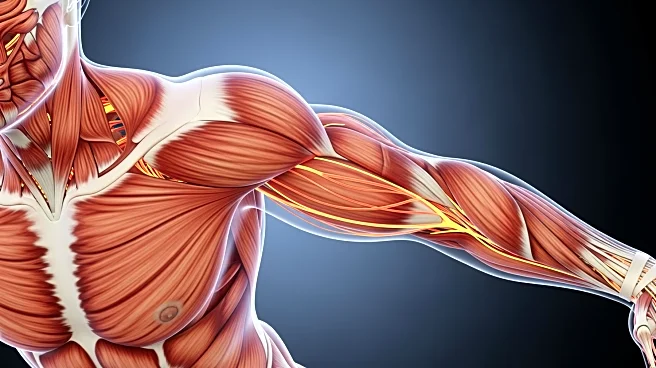




Push-ups are a staple in fitness routines worldwide, known for their simplicity and effectiveness. This exercise, a fundamental part of calisthenics, involves lifting and lowering the body using the arms. While it may seem straightforward, the push-up engages a complex network of muscles and requires precise mechanics to perform correctly.
Primary Muscles Engaged
The push-up primarily targets the pectoral muscles, triceps, and anterior deltoids. These muscles are responsible
for the main movements of the exercise. The pectoralis major and minor, located in the chest, are the primary pushing muscles. As you lower and raise your body, these muscles work hard to control the movement and provide the necessary force.
The triceps brachii, located at the back of the upper arm, play a crucial role in extending the elbow joints during the upward phase of a push-up. The anterior deltoids, part of the shoulder muscles, assist in moving the upper arms toward the chest. Together, these muscles create the power needed to perform a push-up effectively.
Supporting Muscles and Stabilizers
Beyond the primary muscles, push-ups also engage several supporting muscles. The rectus abdominis and transversus abdominis in the abdomen contract to keep the body aligned and off the floor. These muscles help maintain a straight line from head to heels, ensuring proper form.
The erector spinae, a group of muscles running along the spine, act as stabilizers during the exercise. They help maintain the body's posture and prevent sagging in the lower back. Additionally, the gluteus medius and minimus stabilize the upper leg, contributing to overall balance and control.
Variations and Their Impact
Push-ups can be modified to target different muscle groups or increase difficulty. For instance, wide-arm push-ups emphasize the chest muscles, while diamond push-ups place more stress on the triceps. Elevating the feet or hands can shift the focus to different parts of the pectorals, providing a varied workout.
Advanced variations, like planche push-ups, require significant strength and balance, as they involve lifting the entire body weight without foot support. These variations not only challenge the primary muscles but also demand greater engagement from stabilizers, enhancing overall strength and coordination.
Understanding the mechanics and muscle involvement in push-ups can help individuals perform them more effectively and safely. By focusing on proper form and exploring different variations, one can maximize the benefits of this versatile exercise.