




The quintile is a fascinating aspect in astrology that measures 72 degrees between planets. While it is considered a minor aspect, it holds significant meaning in the astrological community. The quintile is often associated with talent and fortunate circumstances, making it a point of interest for those who study the influence of celestial bodies on human affairs. This article delves into the quintile aspect, exploring its characteristics and its role
in astrology.
The Nature of the Quintile Aspect
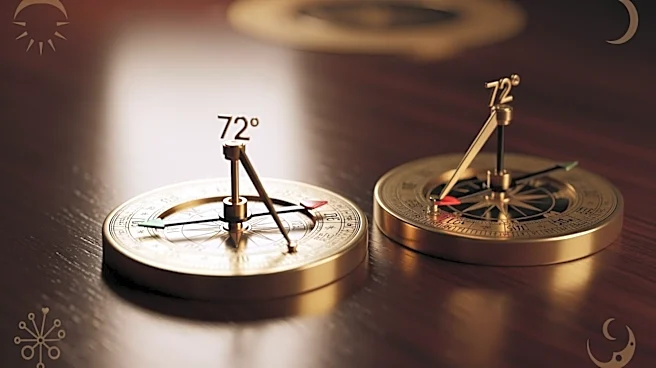
In astrology, aspects are angles formed between planets that influence how they interact with each other. The quintile, measuring 72 degrees, is one of these aspects. It is considered a minor aspect, but its influence is far from negligible. The quintile is often linked to creativity and talent, suggesting that individuals with this aspect in their charts may possess unique abilities or insights.
The quintile's 72-degree angle is derived from dividing the circle of the zodiac by five, which is why it is sometimes associated with the number five and its symbolic meanings. This aspect is believed to bring about a sense of harmony and balance, allowing for the expression of innate talents and the realization of potential. Astrologers often look for quintiles in a chart to identify areas where an individual may excel or experience serendipitous events.
The Quintile's Role in Astrology
While the quintile is not as widely recognized as major aspects like the conjunction or opposition, it plays a crucial role in the nuanced interpretation of astrological charts. Astrologers who focus on minor aspects often consider the quintile to be a marker of special gifts or opportunities. It is thought to indicate areas where an individual can achieve success with relative ease, thanks to the harmonious energy it represents.
The quintile is also associated with the planet Neptune, which governs dreams, intuition, and artistic expression. This connection further emphasizes the aspect's link to creativity and inspiration. When a quintile involves Neptune, it may suggest a heightened ability to tap into the subconscious mind or to channel artistic talents in a meaningful way.
Exploring the Quintile in Practice
In practice, astrologers examine the quintile aspect to gain insights into a person's potential and the unique qualities they may possess. For example, a quintile between Mercury and Venus might suggest a talent for communication or artistic expression, while a quintile involving Mars could indicate a knack for leadership or innovation.
Astrologers also consider the quintile's influence in the context of the entire chart, looking at how it interacts with other aspects and planetary placements. This holistic approach allows for a more comprehensive understanding of an individual's strengths and challenges, as well as the opportunities that may arise throughout their life.
In conclusion, the quintile aspect, though minor, holds significant potential for those who seek to understand its influence. By examining the quintile in an astrological chart, one can uncover hidden talents and opportunities, providing a deeper appreciation for the complexities of astrology.