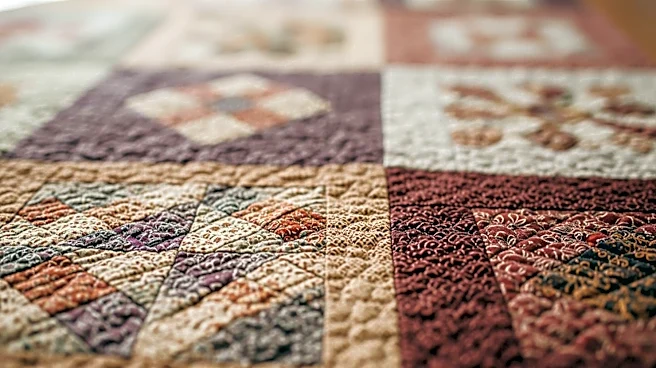





Patchwork, often referred to as "pieced work," is a form of needlework that involves sewing together pieces of fabric into a larger design. This craft has been practiced for centuries, evolving from a practical method of using leftover fabric scraps to a celebrated art form. Today, patchwork is not only a means of creating quilts but also a technique used in making various items such as rugs, bags, and clothing. This article delves into the historical
development of patchwork and its diverse applications.
Historical Roots of Patchwork
Patchwork has a rich history that dates back thousands of years. Evidence of patchwork has been found in ancient Egyptian artifacts, where it was used for clothing, wall decorations, and furniture. The oldest depictions of patchwork date back to 3,400 BCE, showcasing its long-standing presence in human culture. In China, patchwork is believed to have been initiated by Emperor Liu Yu of the Liu Song dynasty, further illustrating its widespread historical significance.
During the Middle Ages, patchwork was utilized in the construction of armor, providing warmth and protection to soldiers. This technique was not limited to Europe; Japanese armor also incorporated quilted fabric layers. As the European climate grew colder, the use of bed quilts increased, leading to the development of decorative quilting practices. These traditions were carried to America by the Pilgrims, where patchwork became an integral part of American culture.
Patchwork in Modern Times
Patchwork experienced a revival during the Great Depression in the United States, as people sought to recycle worn clothing into warm quilts. This period saw a resurgence in the craft, with crafters using both new and old fabrics to create intricate designs. Although patchwork declined after World War II, it was revived again during the American bicentennial, highlighting its enduring appeal.
Today, patchwork is a thriving industry, with the American quilting market valued at $2.7 billion as of 2003. International quilting exhibitions attract thousands of visitors, and the craft has established itself as a legitimate artistic medium. Quilted works of art are sold for thousands of dollars, and quilt historians continue to explore the heritage of traditional quilting.
Cultural Significance and Artistic Expression
Patchwork is not only a craft but also a form of artistic expression. Textile artists often combine patchwork with embroidery and other stitchery techniques to create unique pieces. The crazy quilt, popular during the Victorian era, is a notable example of patchwork's artistic potential. Made from luxurious fabrics like velvets and silks, crazy quilts feature random, asymmetric compositions embellished with fancy embroidery.
In various cultures, patchwork holds symbolic significance. In India, Kantha quilts are made from rags and given as gifts to newborns, while in Pakistan, ralli quilts are a traditional craft gaining international recognition. Patchwork is also common in Azerbaijan, where it is known as qurama, showcasing its global reach and cultural importance.
Patchwork continues to be a beloved craft, celebrated for its historical roots, practical applications, and artistic possibilities. Whether used to create a cozy quilt or a stunning piece of art, patchwork remains a timeless tradition that connects us to our past and inspires creativity.