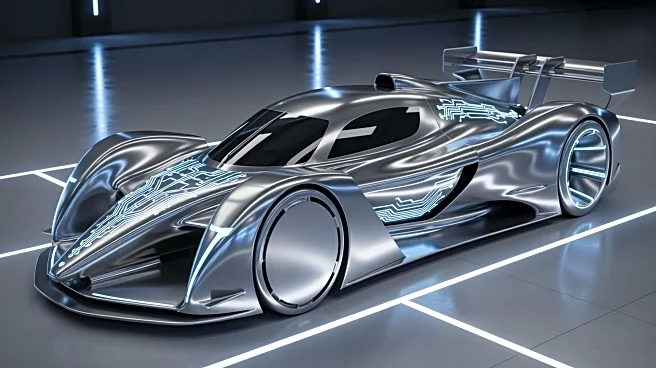




The Garage 56 program at the 24 Hours of Le Mans is a unique platform for testing cutting-edge automotive technologies. This initiative allows concept cars to participate in the race, focusing on innovation rather than competition. Over the years, Garage 56 has been a showcase for groundbreaking advancements in vehicle design and engineering.
Pioneering Concepts
The DeltaWing, introduced in 2012, was the first entry in the Garage 56 program. Its rocket-shaped design and
lightweight structure aimed to deliver high performance with reduced fuel consumption. Although it retired early due to a collision, the DeltaWing demonstrated the potential of alternative vehicle designs in endurance racing.
In 2013, the GreenGT H2, a hydrogen-fueled car, was set to be the first non-internal combustion engine vehicle at Le Mans. Despite being unable to compete, the H2's presence highlighted the potential of hydrogen as a sustainable energy source for racing. The car later completed a demonstration lap in 2016, showcasing its capabilities.
Hybrid and Electric Innovations
The Nissan ZEOD RC, a hybrid electric car, took the Garage 56 slot in 2014. Based on the DeltaWing's design, the ZEOD RC achieved a top speed of 300 km/h and completed a lap using only electric power. This marked a significant milestone in the use of electric propulsion in endurance racing.
In 2016, Frederic Sausset, a quadruple amputee, drove a modified Morgan LMP2, demonstrating the potential of adaptive technologies in motorsport. This entry underscored the program's commitment to inclusivity and innovation.
Recent Technological Advances
The 2023 Garage 56 entry featured a modified NASCAR Cup Series Chevrolet Camaro ZL1, celebrating NASCAR's 75th anniversary. This car, driven by renowned racers like Jimmie Johnson, incorporated advanced engineering to adapt a stock car for endurance racing. The entry highlighted the program's role in bridging different automotive disciplines.
Garage 56 continues to be a vital platform for testing and showcasing new technologies. While these vehicles are not expected to compete for victory, their presence at Le Mans contributes to the evolution of automotive engineering. The program remains a testament to the spirit of innovation and experimentation in motorsport.