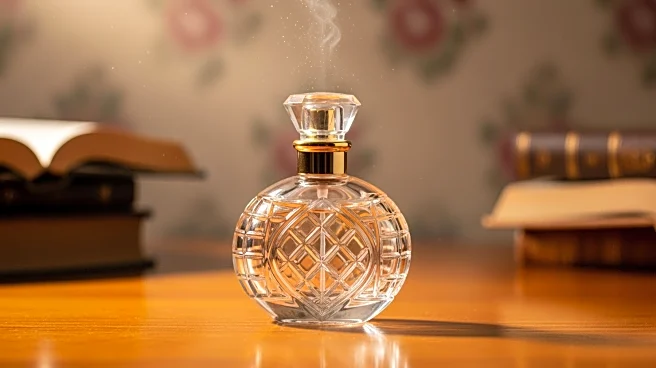




Perfume has been more than just a pleasant scent; it has held cultural significance and symbolic roles in societies throughout history. From religious rituals to social status indicators, the use of perfume has been deeply intertwined with human culture.
Religious and Ritualistic Uses
In ancient Egypt, perfume was integral to religious ceremonies, used to honor the gods and purify the air during rituals. The preparation of perfumes was considered a sacred art, with specific scents
associated with different deities. Similarly, in Islamic culture, the use of perfume was documented as early as the 6th century, with its application considered a religious duty.
Perfume's role in religious practices extended to other cultures as well. The Bible describes a sacred perfume used exclusively by priests, highlighting its spiritual importance. In many societies, the use of fragrance was believed to connect the physical and spiritual realms, enhancing religious experiences.
Social Status and Courtship
Perfume has often been a symbol of social status, with its use indicating wealth and sophistication. In Renaissance Italy, perfumes were used by royalty and the wealthy to mask body odors, a practice that continued in France during the reign of Louis XV. The court of Louis XIV was famously known as "la cour parfumée," where daily applications of scent were a norm.
In Andalusian Spain, women used perfumes for courtship, taking advantage of their greater social freedoms compared to other Muslim regions. Perfume became a tool for attraction, enhancing personal allure and facilitating social interactions.
Modern Symbolism and Industry
Today, perfume continues to hold cultural significance, often associated with personal identity and expression. The fragrance industry has become a global powerhouse, with perfumes marketed as luxury items that convey status and style. The choice of scent can reflect individual personality, mood, and even aspirations.
Perfume's cultural impact is evident in its widespread use and the emotional connections people have with their favorite scents. Whether as a symbol of love, a mark of elegance, or a spiritual enhancer, perfume remains a powerful cultural artifact, bridging the past and present in its aromatic embrace.