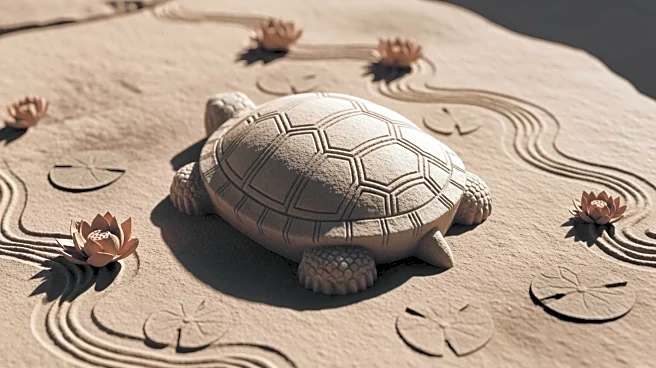

Kurmasana, also known as the Tortoise Pose, is a yoga posture with deep historical roots. This asana is part of both hatha yoga and modern yoga practices. Its name is derived from the Sanskrit words 'Kurma,' meaning turtle or tortoise, and 'Asana,' meaning posture or seat. The pose is not only a physical exercise but also carries significant historical and cultural weight, tracing back to ancient texts and evolving through modern interpretations.
Ancient Origins
The origins of Kurmasana can be traced back to ancient Indian texts. One of the earliest mentions of a related pose, Uttana Kurmasana, appears in the Ahirbudhnya Saṁhitā, a text dating back to the 7th century. This indicates that the concept of a tortoise-like posture has been part of yoga traditions for centuries. The pose was also illustrated in the 19th-century texts Jogapradipika and Sritattvanidhi, showcasing its longstanding presence in yoga literature.
The historical significance of Kurmasana is further highlighted by its association with the god Vishnu. In B. K. S. Iyengar's 1966 book, Light on Yoga, the pose is dedicated to Kurma, the tortoise incarnation of Vishnu. This connection to a divine figure underscores the spiritual dimensions of the asana, linking it to broader themes in Hindu mythology and religious practice.
Modern Interpretations
In modern yoga, Kurmasana has been adapted and described in various ways. B. K. S. Iyengar's Light on Yoga provides a detailed description of the pose, emphasizing its physical and spiritual benefits. The modern version of Kurmasana involves sitting with legs outstretched, bending forward from the hips, and sliding the arms under the knees. The goal is to bring the forehead or chin to the floor, symbolizing the protective and introspective nature of a tortoise retreating into its shell.
This adaptation reflects the broader trend in modern yoga to integrate traditional postures with contemporary exercise practices. While the spiritual aspects remain, the focus has shifted to include physical health and well-being, making Kurmasana accessible to a wider audience.
Cultural Significance
Kurmasana's cultural significance extends beyond its physical practice. The pose embodies the qualities of a tortoise—patience, introspection, and protection. These attributes are central to the practice of yoga, which aims to cultivate inner peace and resilience. By embodying the tortoise, practitioners are reminded of the importance of withdrawing from external distractions and focusing inward.
The pose's enduring presence in both ancient and modern texts highlights its importance in the yoga tradition. As yoga continues to evolve, Kurmasana remains a testament to the practice's rich history and its ability to adapt to contemporary needs while preserving its spiritual essence.