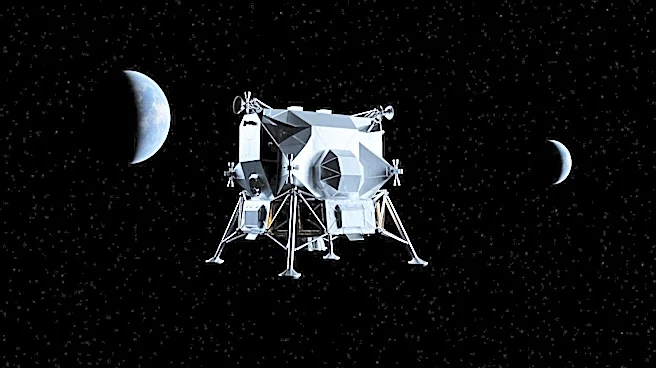









The Lunar Orbiter program was a series of five uncrewed missions launched by the United States in the 1960s to explore the Moon. Among these missions, Lunar Orbiter 4 played a crucial role in expanding our understanding of the lunar surface. Launched on May 4, 1967, it was part of a strategic effort to map the Moon and support future lunar exploration.
The Lunar Orbiter Program
The Lunar Orbiter program was initiated to provide detailed images of the Moon's surface, primarily
to select landing sites for the Apollo missions. The first three missions focused on imaging potential landing sites, while the fourth and fifth missions had broader scientific objectives. Lunar Orbiter 4 was tasked with photographing the entire nearside of the Moon and a portion of the far side, a significant expansion of the program's scope.
All five missions in the program were successful, mapping 99 percent of the lunar surface with high-resolution photographs. The data collected by these missions were instrumental in planning the Apollo landings and advancing lunar science.
Contributions of Lunar Orbiter 4
Lunar Orbiter 4 was unique in its mission objectives compared to its predecessors. While the earlier missions concentrated on specific landing sites, Lunar Orbiter 4 aimed to provide a comprehensive photographic survey of the Moon. This broader approach allowed scientists to gain a more complete understanding of the lunar surface.
The spacecraft successfully entered lunar orbit on May 8, 1967, and despite technical challenges, it transmitted over 500 valuable images back to Earth. These images covered the entire nearside and a portion of the far side, providing critical data for future exploration.
Legacy and Impact
The success of Lunar Orbiter 4 had a lasting impact on lunar exploration. Its comprehensive mapping of the Moon's surface was crucial for the Apollo program, helping to identify safe landing sites and enhancing our understanding of lunar geology. The mission's data also contributed to the broader scientific knowledge of the Moon, informing future missions and research.
Lunar Orbiter 4's achievements demonstrated the effectiveness of the Lunar Orbiter program and underscored the importance of detailed scientific investigation in space exploration. Its legacy continues to influence lunar exploration efforts, highlighting the mission's significance in the history of space exploration.
In summary, Lunar Orbiter 4 was a key player in the Lunar Orbiter program, providing essential data that paved the way for future lunar missions. Its contributions to lunar science and exploration planning remain invaluable, cementing its place in the annals of space exploration.