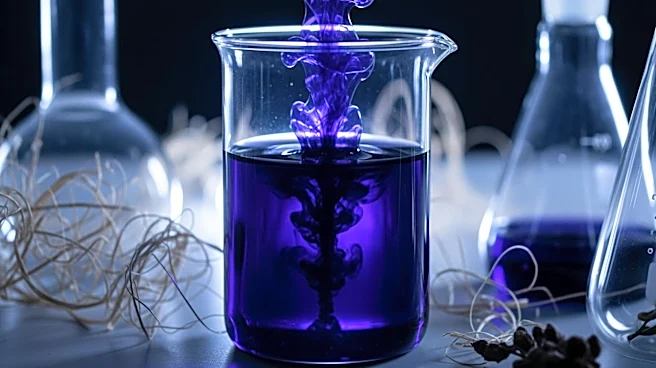





Indigo dye, renowned for its vibrant blue color, is not only a cultural icon but also a fascinating subject of scientific study. This article delves into the chemical properties and synthesis of indigo dye, highlighting the processes that have allowed it to remain a staple in the dyeing industry for centuries.
Chemical Properties of Indigo
Indigo dye is an organic compound with the chemical formula C16H10N2O2. It is a dark blue crystalline powder that sublimes at temperatures between 390 and 392 degrees Celsius. One of the unique characteristics of indigo is its insolubility in water, alcohol, and ether, which classifies it as a pigment rather than a dye in the traditional sense.The deep blue color of indigo is attributed to its molecular structure, which absorbs light in the orange part of the spectrum. This absorption
is due to the conjugation of double bonds within the molecule, which are adjacent and planar. In its reduced form, known as indigo white or leuco-indigo, the molecule becomes non-planar, interrupting the conjugation and rendering it colorless.
Natural and Synthetic Sources
Historically, indigo dye was obtained from the leaves of plants in the Indigofera genus, particularly Indigofera tinctoria. The precursor to indigo in these plants is indican, a colorless compound that, when hydrolyzed, releases indoxyl. Through fermentation and exposure to air, indoxyl dimerizes to form the blue, water-insoluble indigo dye.In the late 19th century, the synthesis of indigo became a major focus for chemists. Adolf von Baeyer, a German chemist, began working on the synthesis of indigo in 1865. By 1897, BASF had developed a commercially viable process for producing synthetic indigo, which involved the use of aniline and other chemicals. This synthetic process allowed for the mass production of indigo, significantly reducing the reliance on natural sources.
Modern Applications and Innovations
Today, most indigo dye is produced synthetically, with around 80,000 tonnes produced annually. The dye is primarily used in the production of denim cloth and blue jeans, where its properties allow for effects such as stone washing and acid washing.Recent innovations in dyeing technology have focused on improving the environmental impact of indigo production. Techniques such as the use of freeze-dried indigo, which has already been reduced and can be stored indefinitely, offer more sustainable options for dyeing processes. As the demand for eco-friendly practices grows, the science behind indigo dye continues to evolve, ensuring its place in the textile industry for years to come.