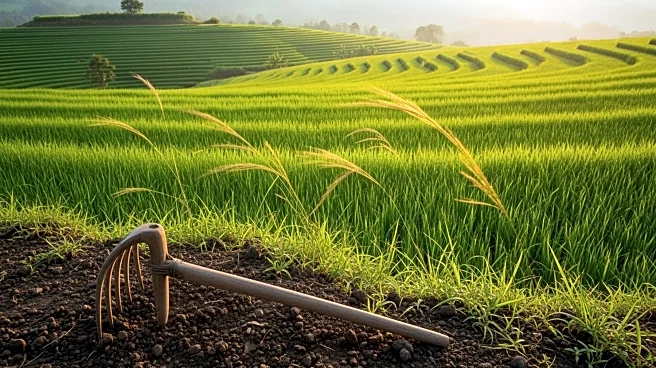




Rice cultivation has a rich and complex history, tracing back thousands of years to its origins in Asia. As a staple food for billions, rice has undergone significant transformations in its cultivation methods, spreading across continents and adapting to various climates and cultures. This article explores the historical journey of rice cultivation, highlighting key developments and its global spread.
Origins in Asia
The domestication of rice began in the Yangtze
River basin in China around 9,000 years ago. This marked the start of rice as a cultivated crop, with early farmers developing techniques to grow rice in wetland environments. The spread of rice cultivation in Asia was facilitated by trade and migration, reaching Korea and Japan by 300 BC.
In India, rice cultivation dates back to around 2000 BC, with evidence of rice farming in the Indus Valley Civilization. The introduction of wetland rice agriculture in India marked a significant shift in agricultural practices, allowing for more efficient production and higher yields.
Spread to Other Regions
Rice cultivation spread from Asia to other parts of the world through trade and exploration. In Africa, Oryza glaberrima, or African rice, was independently domesticated around 3,000 years ago. This variety spread across the continent, becoming a staple in West African diets.
The introduction of rice to the Americas occurred during the Columbian exchange, with European colonizers bringing Asian rice varieties to the New World. Rice quickly became an important crop in the southern United States, particularly in states like South Carolina and Louisiana.
Technological Advancements
Over the centuries, rice cultivation has seen numerous technological advancements. Traditional methods, such as manual planting and harvesting, have been replaced by mechanized processes that increase efficiency and reduce labor costs. The development of hybrid rice varieties has also contributed to higher yields and improved resistance to pests and diseases.
Modern rice farming techniques, such as the System of Rice Intensification (SRI), have further enhanced productivity by optimizing water usage and planting density. These innovations have helped sustain rice production in the face of challenges like climate change and resource scarcity.
Rice cultivation has evolved significantly from its early beginnings in Asia, adapting to new environments and technologies. Its journey across continents and cultures underscores its importance as a global staple, providing sustenance and economic stability for millions worldwide.