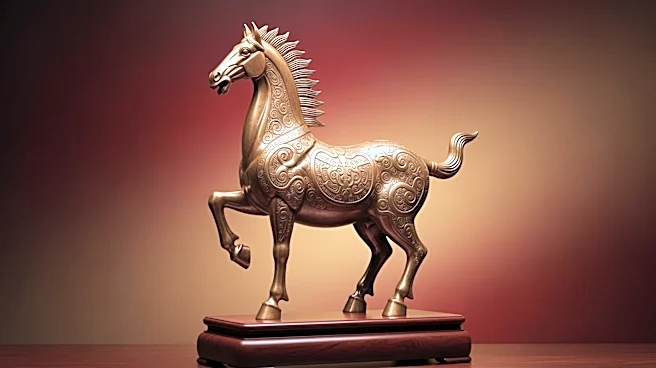




The Horse is a prominent figure in the Chinese zodiac, representing one of the twelve animals in the cycle. This article delves into the historical roots and significance of the Horse within the Chinese zodiac, tracing its origins and the cultural narratives that have shaped its role over centuries. Understanding the historical context of the Horse provides insight into its enduring presence in Chinese culture.
Origins of the Chinese Zodiac
The Chinese zodiac, including the Horse,
is deeply rooted in ancient Chinese history. The system is based on a 12-year cycle, with each year associated with a specific animal. This tradition can be traced back to the 14th century B.C., with the lunar calendar playing a crucial role in its development. According to myths, the first Chinese emperor, Huangdi, invented the lunar calendar in 2637 B.C., which follows the cycles of the moon. This calendar laid the groundwork for the zodiac system, which has been a part of Chinese culture for millennia.
The sequence of the zodiac animals, including the Horse, is explained through folklore. One popular story involves a race among the animals to determine their order in the zodiac. This narrative not only explains the sequence but also imbues each animal with specific characteristics and symbolism. The Horse, as the seventh animal, holds a unique place in this cycle, representing traits such as strength and independence.
The Horse in Chinese Mythology
The Horse has a significant presence in Chinese mythology, often depicted as a symbol of power and freedom. Throughout history, the Horse has been associated with various legends and folktales, reflecting its importance in Chinese culture. During the Han dynasty (201 BC – 220 AD), the custom of pairing an animal with a year became more formalized, and the Horse's role in the zodiac was solidified.
In art and design, the Horse is frequently portrayed alongside other zodiac animals. A notable example is a collection of Chinese figures in the Victoria and Albert Museum, where the zodiac animals are depicted with human bodies and animal heads. This style became popular during the Tang dynasty in the 8th century, highlighting the cultural significance of the Horse and other zodiac animals in Chinese art.
The Horse's Symbolism and Influence
The Horse is associated with the Earthly Branch symbol Wu and is linked to the element Fire and the Yang nature. These associations contribute to the Horse's symbolic meaning, representing energy, passion, and dynamism. The Horse's cardinal point is South, and its lunar month spans from June 7 to July 6, aligning with the summer season.
In addition to its symbolic attributes, the Horse is connected to specific lucky numbers, colors, and flowers. Numbers 4, 5, and 7 are considered fortunate, while colors like gold, orange, yellow, and red are deemed lucky. Sunflowers and jasmine are the Horse's lucky flowers, further enriching its cultural symbolism.
Overall, the Horse's historical and cultural significance in the Chinese zodiac is profound. Its enduring presence in mythology, art, and symbolism underscores its importance in Chinese culture, making it a fascinating subject for exploration.