


Whirlaway, the champion American Thoroughbred racehorse, had a racing career marked by significant victories and notable challenges. Bred at Calumet Farm and trained by Ben A. Jones, Whirlaway's journey on the racetrack was a testament to his talent and resilience. This article provides an in-depth look at Whirlaway's racing career, highlighting his key victories and the challenges he faced along the way.
Early Success and Triple Crown Victory
Whirlaway's racing career began with promise,
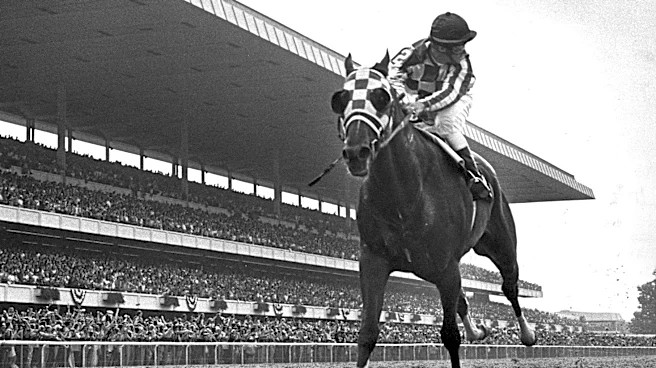
as he was voted the American Champion Two-Year-Old Colt in 1940. His early success set the stage for his remarkable achievements in the following years. In 1941, Whirlaway captured the Triple Crown, winning the Kentucky Derby, Preakness Stakes, and Belmont Stakes.
His victory in the Kentucky Derby was particularly impressive, as he tied the record for the longest winning margin of eight lengths. Whirlaway's ability to dominate the field in each of the Triple Crown races showcased his exceptional speed and stamina, earning him the title of American Horse of the Year in 1941.
Facing Challenges and Overcoming Obstacles
Despite his success, Whirlaway's racing career was not without challenges. He had a habit of "bearing out," drifting toward the middle of the racetrack during races. This tendency posed a significant obstacle, as it could lead to losses if not managed effectively.
Trainer Ben A. Jones addressed this issue by fitting Whirlaway with a full-cup blinker over his right eye, helping him maintain a straight path during races. This adjustment was crucial in Whirlaway's preparation for the Kentucky Derby, allowing him to perform at his best and secure victory.
Continued Success and Legacy
Whirlaway's success extended beyond the Triple Crown. He went on to win the Travers Stakes, becoming the first and only horse to win all four races, a feat sometimes referred to as a "superfecta." His ability to consistently perform at the highest level earned him the title of American Horse of the Year again in 1942.
Whirlaway's racing career left a lasting impact on the sport, with his unique personality and dramatic finishes captivating audiences. Inducted into the National Museum of Racing and Hall of Fame in 1959, Whirlaway's legacy continues to be celebrated, ensuring that his contributions to horse racing are remembered by future generations.