
Gothic book illustration, also known as Gothic illumination, is a fascinating art form that originated in Europe during the High and Late Middle Ages. This article explores the origins and development
of Gothic book illustration, highlighting its stylistic features and historical significance.
Origins and Early Development
Gothic book illustration began in France and England around 1160/70, while Romanesque forms remained dominant in Germany until around 1300. France emerged as the leading artistic nation during the Gothic period, influencing stylistic developments in book illustration across Europe. The transition from the late Gothic period to the Renaissance saw a decline in the importance of book illustration due to the widespread adoption of printing.
During the 12th and 13th centuries, commercial book production emerged alongside monastic book production. This period saw the rise of artistic personalities gaining recognition by name. The high nobility replaced the clergy as the primary patrons of book illustration, leading to an increase in secular literature at courts. Despite this shift, the book of hours for private use remained the most commonly illustrated type of book.
Stylistic Features
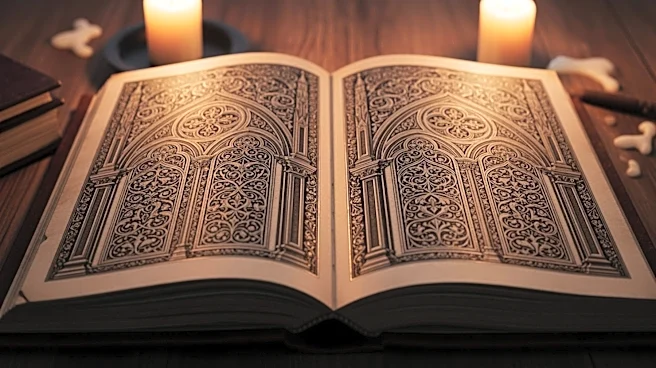
Gothic painting is characterized by a soft, sweeping figure style and flowing draperies, which remained consistent throughout the Gothic period. This style culminated in the "Soft Style," known for its courtly elegance and elongated figures. Contemporary architectural elements were often used to decorate pictorial fields, adding a unique visual dimension to the illustrations.
From the latter half of the 12th century, red and blue fleuron initials became a common form of decoration in manuscripts. Independent scenes were often executed as historiated initials and drolleries, offering space for imaginative depictions that were independent of the illustrated text. In the 15th century, naturalistic realism became increasingly prevalent, emphasizing perspective, spatial depth, and realistic anatomy.
Influence and Legacy
Gothic book illustration was heavily influenced by other art forms, particularly stained glass, which marked Gothic cathedrals. The bright reds and blues of stained glass were directly adopted in miniatures, contributing to the luminosity of the manuscripts. Architectural sculptural forms also became common as pictorial ornamentation, reflecting the intricate designs of Gothic cathedrals.
The introduction of paper as a writing material revolutionized the book industry, making books more affordable and accessible. As a result, the level of decoration in books declined, with text illustration becoming more common. Despite these changes, Gothic book illustration left a lasting legacy, influencing the development of book art and paving the way for the Renaissance.