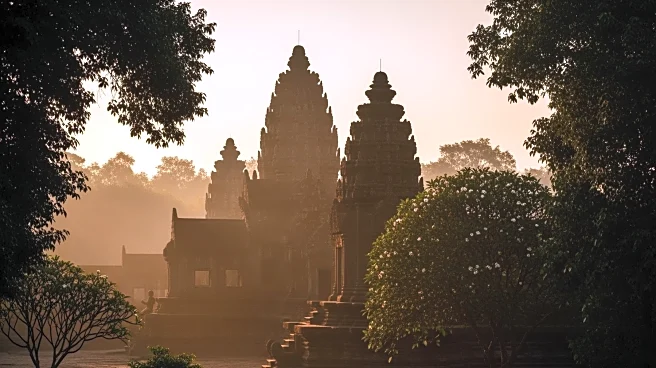




Angkor Wat stands as a testament to Cambodia's rich cultural heritage and historical significance. As one of the most iconic landmarks in Southeast Asia, this ancient temple complex is not only a symbol of national pride but also a major draw for tourists worldwide. Understanding the cultural and historical importance of Angkor Wat provides insight into Cambodia's past and its enduring legacy.
Historical Background and Architecture
Angkor Wat was constructed during the early 12th century
by King Suryavarman II, originally as a Hindu temple dedicated to the god Vishnu. It later transformed into a Buddhist temple, reflecting the religious shifts in the region. The temple's architecture is a masterpiece of Khmer design, featuring a series of five towers that symbolize Mount Meru, the center of the universe in Hindu and Buddhist cosmology.
The intricate carvings and bas-reliefs that adorn the temple walls depict scenes from Hindu mythology, including the famous Churning of the Ocean of Milk. These artistic elements not only showcase the skill and creativity of the Khmer artisans but also serve as a historical record of the beliefs and values of the time.
Cultural and Religious Significance
Angkor Wat holds immense cultural and religious significance for the Cambodian people. It is a source of national identity and pride, representing the zenith of Khmer civilization. The temple complex is a place of pilgrimage for Buddhists and a symbol of spiritual continuity in Cambodia's history.
The preservation of Angkor Wat is crucial for maintaining Cambodia's cultural heritage. Efforts to protect and restore the site have been supported by international organizations and governments, recognizing its value as a cultural treasure. The temple's inclusion as a UNESCO World Heritage Site underscores its global importance and the need for ongoing conservation.
Impact on Tourism and Economy
As a major tourist attraction, Angkor Wat plays a vital role in Cambodia's economy. It draws millions of visitors each year, contributing significantly to the tourism sector and providing employment opportunities for local communities. The revenue generated from tourism helps fund conservation efforts and supports the development of infrastructure in the region.
The challenge for Cambodia is to balance the economic benefits of tourism with the need to preserve Angkor Wat's cultural and historical integrity. Sustainable tourism practices are essential to ensure that future generations can continue to appreciate the beauty and significance of this ancient wonder. By promoting responsible tourism, Cambodia can protect its cultural heritage while fostering economic growth.