





Spatulas are a common tool found in many kitchens, but their utility extends far beyond cooking. These broad, flat, and flexible blades are used for mixing, spreading, and lifting materials in various fields, including culinary arts, medicine, and laboratories. The term 'spatula' itself has an interesting origin, deriving from the Latin word for a flat piece of wood or splint. This article delves into the diverse applications and types of spatulas,
highlighting their importance in different contexts.
Culinary Uses of Spatulas
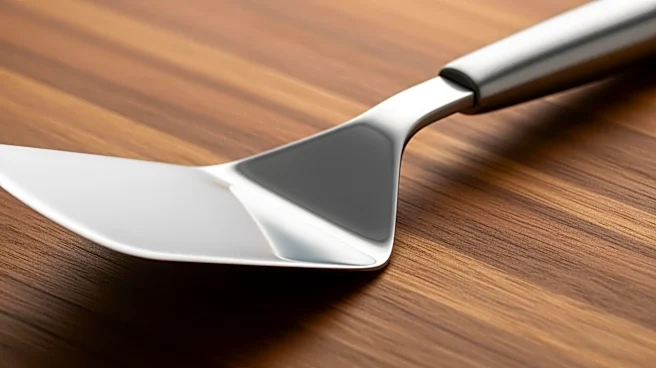
In the kitchen, spatulas are indispensable tools for both amateur cooks and professional chefs. In American English, the term 'spatula' broadly refers to a variety of utensils, including turners or flippers, which are used to lift and flip food items like pancakes and fillets. These spatulas typically have blades made of metal or plastic, with handles designed to insulate from heat, ensuring safe handling during cooking.
Another common type of kitchen spatula is the frosting spatula, also known as a palette knife. This tool is essential for bakers, as it helps in spreading frosting evenly over cakes and pastries. Additionally, bowl and plate scrapers, sometimes referred to as spatulas, are used to scrape every last bit of batter or dough from mixing bowls, minimizing waste and ensuring thorough mixing.
Spatulas in Medical and Laboratory Settings
Beyond the kitchen, spatulas play a crucial role in medical and laboratory environments. In medical applications, the term 'spatula' is often synonymous with a tongue depressor, a tool used by healthcare professionals to hold down the tongue for examination of the mouth and throat. This usage highlights the versatility of spatulas in adapting to different needs.
In laboratories, spatulas are essential for handling chemicals and other substances. These tools, often made of stainless steel, are used for scraping, transferring, or applying powders and paste-like chemicals. Their resistance to acids, bases, heat, and solvents makes them ideal for a wide range of laboratory applications. Disposable polystyrene spatulas are also available, preventing contamination and ensuring precision in scientific research.
The Evolution and Etymology of Spatulas
The word 'spatula' has been part of the English language since 1525, with its roots in Latin. The diminutive form of the Latin 'spatha,' meaning 'broadsword,' reflects the tool's broad and flat design. This etymology is shared with words like 'spade' and 'spathe,' which also describe flat, broad tools.
Over time, the design and materials of spatulas have evolved to meet the needs of various industries. From the kitchen to the laboratory, spatulas have proven to be versatile and essential tools, adapting to the demands of different tasks while maintaining their fundamental design.