



In the realm of economics, markets play a pivotal role as the backbone of trade and resource allocation. A market is essentially a system where parties engage in the exchange of goods and services. This exchange can occur through barter or, more commonly, through monetary transactions. Markets are crucial because they facilitate trade, allowing for the distribution and allocation of resources within a society. By enabling the evaluation and pricing
of tradeable items, markets help establish the value of goods and services, thus driving economic activity.
The Structure and Function of Markets
Markets are composed of various systems, institutions, procedures, social relations, or infrastructures that enable parties to engage in exchange. While barter is a form of exchange, most markets rely on sellers offering goods or services to buyers in exchange for money. This process helps establish the value of goods and services, facilitating trade and enabling the distribution and allocation of resources. Markets can emerge spontaneously or be deliberately constructed to enable the exchange of rights to services and goods.
The structure of a market can vary significantly based on several factors, including the products or factors sold, product differentiation, geographic location, and the level of government regulation. For instance, markets can range from local food markets in a single building to the global diamond trade. The geographic boundaries of a market can vary widely, from a local city to an entire country or even an international trade bloc.
Market Forces: Supply and Demand
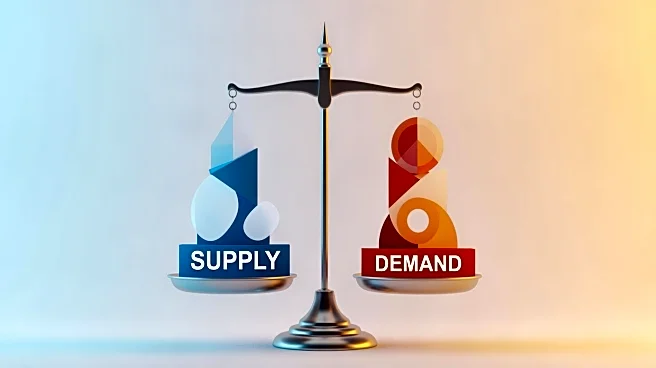
A fundamental aspect of markets is the interaction of supply and demand, which determines prices. Market participants, consisting of buyers and sellers, influence the price of goods and services. This interaction is a major topic of study in economics, leading to various theories and models concerning market forces. The balance of supply and demand is crucial for market equilibrium, where the quantity supplied equals the quantity demanded.
The concept of a free market, one free from government intervention, is a topic of debate. While some argue that free markets lead to efficient resource allocation, others point out potential market failures, such as monopolies or externalities, that can distort prices and reduce market efficiency.
The Evolution and Types of Markets
Markets have evolved over time, adapting to changes in society and technology. They can be categorized into various types, such as physical consumer markets, online auctions, and financial markets. Each type serves a specific purpose and operates under different conditions. For example, financial markets facilitate the exchange of liquid assets, while online auctions allow for the buying and selling of goods through bidding processes.
In conclusion, markets are a fundamental component of economic systems, driving trade and resource allocation. By understanding the structure, function, and forces at play within markets, we can better appreciate their role in shaping economic activity and influencing societal development.