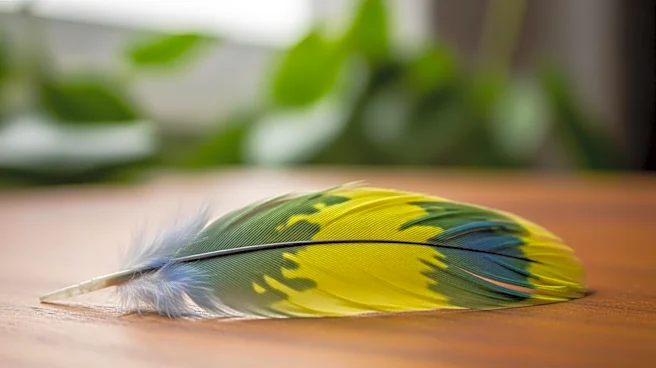

The budgerigar, often affectionately called the budgie, is a small parrot native to Australia that has captured the hearts of pet owners worldwide. Known for their vibrant colors and ability to mimic human
speech, these birds have a fascinating journey from their natural habitats to becoming one of the most popular pets. This article delves into the budgerigar's natural environment, their domestication, and their enduring appeal as household companions.
Native Habitat and Characteristics
Budgerigars are native to the open habitats of Australia, where they thrive in scrublands, open woodlands, and grasslands. These small, long-tailed parrots are naturally green and yellow with black, scalloped markings on their nape, back, and wings. In the wild, they are known for their nomadic lifestyle, moving in flocks to find food and water as environmental conditions change. This adaptability has allowed them to survive in the harsh inland conditions of Australia for over five million years.
In their natural setting, budgerigars are typically found in small flocks, although they can form large groups under favorable conditions. Their movement is closely tied to the availability of food and water, and they are known to feed primarily on grass seeds. The birds have two distinct flight speeds, which they can switch between depending on the situation, showcasing their agility and adaptability in the wild.
Domestication and Popularity
The domestication of budgerigars began in the 19th century, and they have since become one of the most popular pet birds worldwide. Their small size, low cost, and ability to mimic human speech make them an attractive choice for pet owners. Budgerigars are the third most popular pet globally, following dogs and cats, and have been bred in captivity to exhibit a wide range of colors, including blues, whites, yellows, and greys.
In captivity, budgerigars are bred opportunistically and in pairs, much like their wild counterparts. They are social animals that require stimulation, often interacting with humans or other budgerigars. Tame budgerigars can be taught to speak, whistle, and perform simple tricks, with males generally being more adept at mimicry than females.
The Budgerigar's Enduring Appeal
The budgerigar's ability to adapt to both wild and domestic environments is a testament to their resilience and charm. Their vibrant colors and engaging personalities have made them a beloved pet for many households. In addition to their aesthetic appeal, budgerigars are known for their social nature, often forming strong bonds with their human caretakers.
Despite their popularity, it is essential for potential budgerigar owners to understand the needs of these birds, including their dietary requirements and the need for social interaction. With proper care, budgerigars can live for several years, providing companionship and joy to their owners. Their journey from the wilds of Australia to homes around the world is a remarkable story of adaptation and affection.