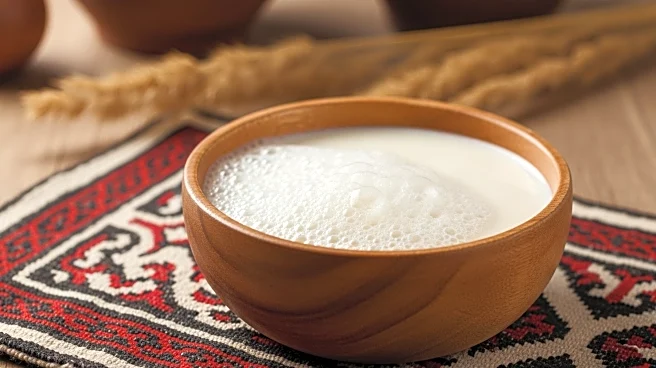




Kumis, a traditional fermented dairy drink made from mare's milk, has a storied history in Central Asia. This article traces the historical development of kumis, exploring its origins, evolution, and enduring significance among Turkic and Mongolic peoples.
Ancient Origins and Early Consumption
The history of kumis dates back to ancient times, with evidence suggesting its consumption by the Botai culture of Kazakhstan. Archaeological investigations have revealed traces of milk in bowls
from the site of Botai, indicating the domestication of dairy animals. Although specific evidence of fermentation has not been found, the nutritional properties of mare's milk suggest a high possibility of kumis production.
Herodotus, in his 5th-century BC Histories, provides one of the earliest descriptions of kumis-making among the Scythians. His account details the unique method of mare-milking and the subsequent fermentation process, highlighting the drink's ancient roots. This historical context underscores the long-standing tradition of kumis consumption in Central Asia.
Evolution Through the Ages
Kumis has evolved over the centuries, adapting to the changing lifestyles and needs of Central Asian peoples. During the 13th century, traveler William of Rubruck documented the preparation of kumis among the Mongols, describing its fermentation and the joy it brought to those who consumed it. His account reflects the cultural importance of kumis and its role in social gatherings.
In the 19th century, kumis was used to treat gastrointestinal disorders, showcasing its perceived medicinal properties. The drink's evolution from a traditional beverage to a therapeutic remedy highlights its versatility and enduring appeal.
Kumis in Contemporary Times
Today, kumis remains a significant cultural symbol in Central Asia. Despite modern advancements in production methods, the traditional essence of kumis is preserved, maintaining its unique flavor and light body. The drink continues to be celebrated for its cultural and social significance, serving as a link to the region's rich heritage.
Kumis has also found new expressions in contemporary culinary creations, such as kumis-flavored ice cream, reflecting its adaptability and enduring popularity. As Central Asian communities embrace modern lifestyles, kumis remains a testament to their historical roots and cultural identity.
The historical journey of kumis illustrates its importance as a cultural and social staple in Central Asia. From ancient origins to modern adaptations, kumis continues to be cherished for its unique flavor and cultural significance, embodying the traditions and values of Turkic and Mongolic peoples.