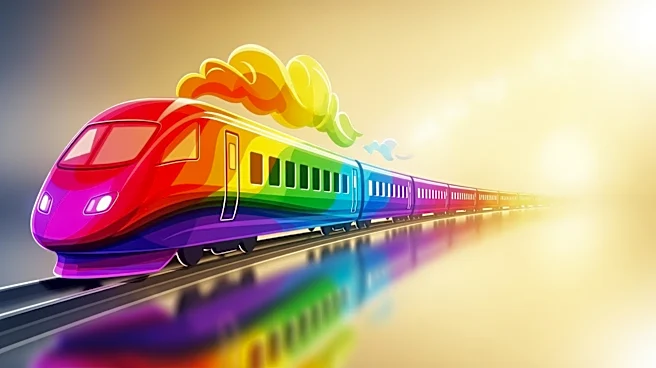

Amtrak's inception in 1971 marked a significant shift in the landscape of intercity passenger rail service in the United States. This period, known as the "Rainbow Era," was characterized by a vibrant
mix of train liveries inherited from various predecessor railroads. The era was short-lived but left a lasting impression on the identity of Amtrak as it transitioned into a unified national service.
A Patchwork of Colors
When Amtrak began operations on May 1, 1971, it inherited a diverse collection of rolling stock from twenty different railroads. Each of these railroads had its own distinct colors and logos, resulting in a colorful patchwork of liveries on Amtrak's trains. This mix of equipment was a stark contrast to the coordinated liveries that passengers were accustomed to seeing on individual railroads. The term "Rainbow Era" aptly describes this period of visual diversity.
Amtrak's initial fleet consisted of 1,200 of the best passenger cars selected from a pool of 3,000 owned by private railroads. These cars were chosen based on their condition, but they did not always remain on their original routes. As a result, trains often featured mismatched colors from several predecessor railroads, creating a unique and eclectic appearance that was both a logistical challenge and a visual spectacle.
Challenges of the Rainbow Era
The Rainbow Era presented several challenges for Amtrak. The most significant was the maintenance of a fleet with such varied origins. Mechanics from one railroad were often unfamiliar with the equipment from another, leading to difficulties in upkeep and repairs. Additionally, the majority of the inherited equipment was steam-heated, which posed further complications during harsh weather conditions.
Despite these challenges, the Rainbow Era was a necessary transitional phase for Amtrak. It allowed the company to establish its operations while gradually moving towards a more unified identity. The colorful trains, while visually appealing, underscored the need for a cohesive brand that passengers could easily recognize and trust.
Transition to a Unified Identity
The Rainbow Era came to an end as Amtrak began purchasing some of the leased equipment in mid-1971. This set the stage for a comprehensive repainting effort from 1972 to 1974. The introduction of the Phase paint schemes marked the beginning of Amtrak's journey towards a unified visual identity. These schemes primarily featured geometric arrangements of red, white, and blue, reflecting the national colors of the United States and reinforcing Amtrak's patriotic image.
The transition from the Rainbow Era to the Phase schemes was a pivotal moment in Amtrak's history. It not only addressed the practical challenges of maintaining a diverse fleet but also helped solidify Amtrak's brand as a national passenger railroad. The legacy of the Rainbow Era lives on as a reminder of Amtrak's colorful beginnings and its evolution into a cohesive and recognizable service.