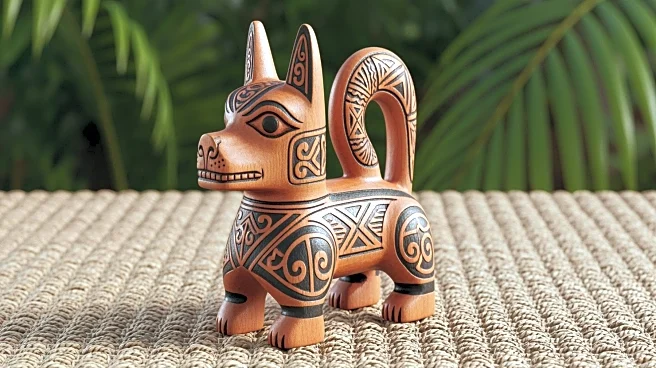




The Marquesan Dog, now extinct, once played a significant role in the cultural and spiritual life of the Marquesas Islands. These dogs were not merely pets or working animals; they were deeply embedded in the social and religious fabric of the Marquesan people. Through petroglyphs and archaeological findings, we can piece together the symbolic importance of these dogs and their connection to the high chiefs and priestly classes.
Symbolic Importance in Marquesan Society
In Marquesan society,
the dog was more than just an animal; it was a symbol of tribal identity and loyalty. The Marquesan Dog was associated with the Naki'i tribe and served as a totem animal. This association with tribal identity highlights the dog's role in representing clan loyalty and social cohesion within the islands.
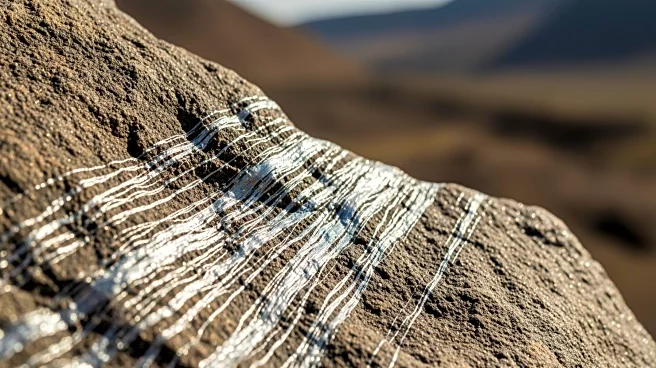
Petroglyphs depicting dogs have been found near religious centers and chiefly residential areas, indicating their revered status. These carvings often show the dogs in exaggerated forms, with long necks and bodies, suggesting a symbolic rather than realistic representation. The presence of these petroglyphs near important cultural sites underscores the dog's significance in religious and social contexts.
Religious and Totemic Roles
The Marquesan Dog also held religious significance, serving as a totem and religious symbol. In many Polynesian cultures, animals are often seen as intermediaries between the physical and spiritual worlds. The Marquesan Dog's association with high chiefs and priestly classes suggests it played a role in religious ceremonies and rituals.
Despite their importance, the dogs were rarely consumed as food, unlike in other parts of Polynesia. This rarity in consumption further emphasizes their symbolic value over their practical use as a food source. The dogs' scarcity likely contributed to their elevated status, making them more valuable as symbols than as sustenance.
Legacy and Archaeological Evidence
Although the Marquesan Dog became extinct before European explorers arrived, their legacy lives on through archaeological findings. Excavations have uncovered dog bones and burials, providing physical evidence of their existence. These findings, along with the petroglyphs, offer insights into the cultural and symbolic roles the dogs played in Marquesan society.
The extinction of the Marquesan Dog serves as a poignant reminder of the cultural shifts and environmental changes that can occur with human settlement. Today, the archaeological remnants of these dogs continue to inform our understanding of Marquesan culture and the complex relationships between humans and animals in Polynesian societies. Through these remnants, the Marquesan Dog remains a symbol of the rich cultural heritage of the Marquesas Islands.