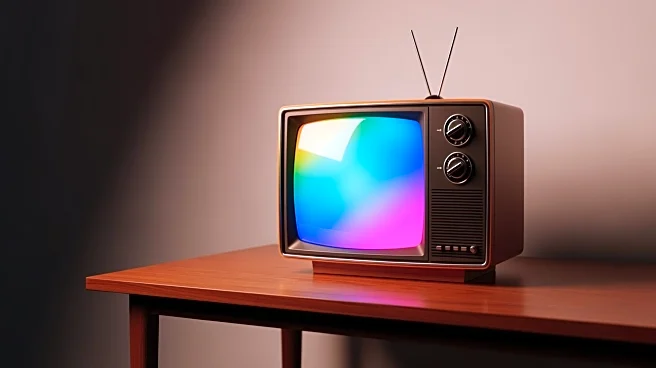




The RCA CT-100 holds a special place in the history of television as one of the first mass-produced color TV sets. Introduced in April 1954, it marked a significant milestone in consumer electronics, offering viewers a new way to experience television. Despite not being the first color TV, the CT-100 was the first to be widely available, setting the stage for future developments in television technology.
The Birth of Color Television
The RCA CT-100 was launched at a time when television
was undergoing a major transformation. Prior to its introduction, the Westinghouse H840CK15 was the first color TV set released in March 1954, but it was not mass-produced, with only 500 units made and about 30 sold. The CT-100, on the other hand, was produced in larger quantities, with 4,400 units manufactured at RCA's Bloomington, Indiana plant. This made color television more accessible to the general public, despite its high price tag of $1,000, equivalent to half the cost of a new low-end automobile at the time.
The CT-100 featured a 15-inch diagonal color picture tube, although the viewable picture was only 11½ inches wide. It was equipped with 36 vacuum tubes in its CTC-2 chassis, known as "Merrill" to RCA's marketing department. This made it the most complex electronic device available to consumers at the time.
Challenges and Innovations
Despite its groundbreaking nature, the CT-100 faced several challenges. Both the CT-100 and its Westinghouse counterpart suffered from color fringing around the edges of objects on the screen, a common issue with early color televisions. Additionally, the CT-100's tri-color cathode ray tube, the 15GP22, was notorious for its glass-to-metal seals breaking down, causing the tube to lose its vacuum. This made it extremely rare to find working tubes today.
RCA sold the CT-100 at a loss, and after initial sales to early adopters, the rest sold poorly even after a price cut. Many units were donated to trade schools and technical colleges for training purposes, which is why most of the surviving sets today come from these institutions.
Legacy and Collector Interest
The CT-100's legacy is preserved through the efforts of electronics collectors and restorers who seek out these rare sets. Restorers often spend thousands of dollars to obtain or repair a CT-100, highlighting its value as a collector's item. Approximately 150 CT-100 sets are believed to survive, with only 30 restored and operational.
Institutions like the Early Television Museum in Hilliard, Ohio, and the SPARK Museum of Electrical Invention in Bellingham, Washington, have restored and working sets on display, allowing the public to appreciate this piece of television history. The CT-100's introduction paved the way for future advancements in television technology, making it a significant artifact in the evolution of consumer electronics.