


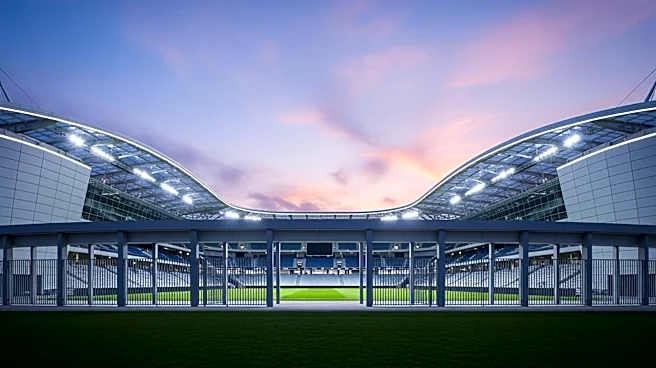


The Waldstadion in Frankfurt, Germany, has a rich history that reflects its evolution from a multi-purpose sports venue to a modern football stadium. Opened in 1925, the stadium has undergone several transformations to meet the changing demands of sports and entertainment. This article explores the key phases in the development of the Waldstadion, highlighting its significance in the world of sports.
Early Years and Initial Construction
The Waldstadion was inaugurated on May 21, 1925,
after four years of construction. Built on the site of a former military shooting range, the stadium initially had a capacity of 35,000 spectators. The design included earthworks for the grandstands, with the north side featuring a reinforced concrete structure inspired by ancient Greek theaters. The stadium quickly became a central hub for sports in Frankfurt, hosting the final of the German football championship in June 1925.
In its early years, the Waldstadion also hosted the 1925 Workers' Summer Olympiad, drawing a crowd of 40,000 for the football final between Germany and Finland. By 1937, the stadium's capacity was increased to 55,000, reflecting its growing importance as a venue for major sporting events.
Mid-Century Modifications and the Bundesliga Era
The Waldstadion underwent significant changes in the 1950s following an incident where 70,000 tickets were sold for a match designed for 55,000 spectators, resulting in injuries as fans attempted to enter. This led to renovations that increased the stadium's capacity and improved safety features. By 1955, the stadium was reopened, hosting national team matches and significant games for Eintracht Frankfurt.
The introduction of the Bundesliga in 1963 marked a new era for the Waldstadion, with the first Bundesliga game taking place there in August of that year. The stadium also hosted international events, including the World Championships in track cycling in 1966 and a heavyweight boxing match featuring Muhammad Ali.
Modernization and Current Usage
In preparation for the 1974 FIFA World Cup, the Waldstadion underwent a major reconstruction, essentially being rebuilt to meet modern standards. This renovation included the installation of improved drainage and undersoil heating. The stadium continued to evolve, hosting the first final of the Women's European Cup in 2002 and becoming a key venue for the 2005 FIFA Confederations Cup and the 2006 FIFA World Cup.
Today, the Waldstadion, now known as Deutsche Bank Park, serves as the home stadium for Eintracht Frankfurt and hosts a variety of events, including American football games and concerts. Its capacity and facilities have been continually updated to accommodate diverse sporting and entertainment needs, ensuring its place as a premier venue in Germany.