






The Battle of Palmito Ranch, fought on May 12-13, 1865, in Texas, is often considered the final battle of the American Civil War. Despite occurring over a month after General Robert E. Lee's surrender at Appomattox Court House, this engagement marked a Confederate victory. The battle's timing and outcome have sparked debates about its significance and the motivations behind it.
The Context of the Battle
The Battle of Palmito Ranch took place on the banks of the Rio Grande,
east of Brownsville, Texas. By this time, the Civil War was effectively over, with major Confederate forces having surrendered. However, communication delays and the refusal of Confederate General Edmund Kirby Smith to surrender the Trans-Mississippi Department meant that hostilities continued in some areas. Union forces in southern Texas had been observing an unofficial truce with their Confederate counterparts since early 1865, but this peace was disrupted by Union Colonel Theodore H. Barrett.
Barrett, newly assigned to command an all-black unit, ordered an attack on a Confederate camp near Fort Brown. The reasons for this decision remain unclear, but it led to a confrontation with Confederate forces under Colonel John Salmon Ford. The Union forces initially captured some prisoners, but the following day, they were repulsed near Palmito Ranch, resulting in a Confederate victory.
The Battle's Outcome and Casualties
The battle involved a mix of Union and Confederate forces, including African-American, Hispanic, and Native American troops. The Union forces, numbering around 500, faced approximately 300 Confederate soldiers. Despite the Union's numerical advantage, the Confederates, aided by artillery reportedly supplied by the French Army in nearby Matamoros, managed to drive the Union forces back.
Casualty estimates from the battle are unreliable, but it is believed that Union Private John J. Williams of the 34th Indiana Infantry Regiment was the last man killed during the engagement, possibly making him the final combat death of the Civil War. Union casualties were reported as one killed, nine wounded, and 105 captured, while Confederate casualties were minimal.
The Aftermath and Historical Debate
Following the battle, Confederate General Edmund Kirby Smith officially surrendered all Confederate forces in the Trans-Mississippi Department on June 2, 1865. Despite this, the Battle of Palmito Ranch remains a point of contention among historians. Some argue that it was a needless engagement, while others suggest it was driven by a desire for honor or material gain.
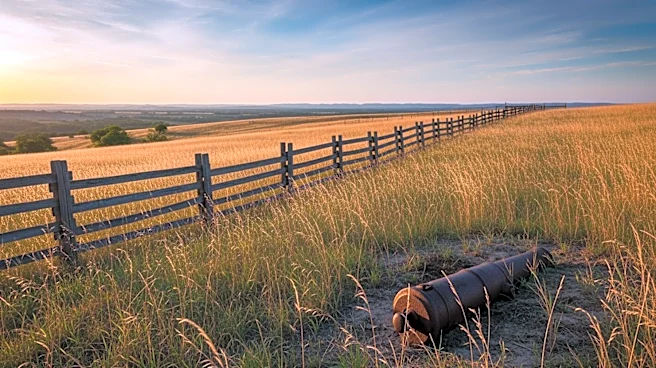
The battle's legacy is preserved at the Palmito Ranch Battlefield, which remains largely unchanged since 1865. Designated a National Historic Landmark in 1997, the site serves as a reminder of the complexities and enduring impacts of the American Civil War's final days.