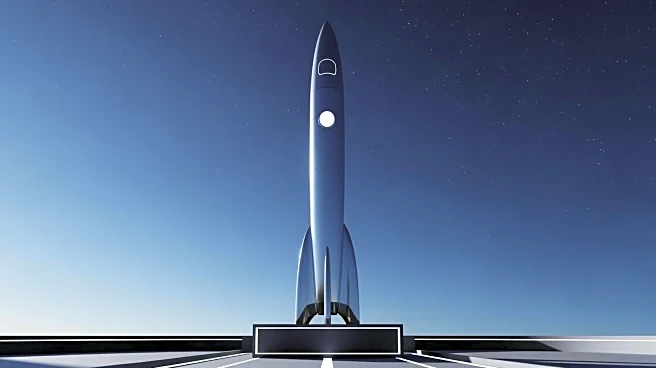




The Saturn I rocket was a technological marvel of its time, representing a significant leap in rocket design and engineering. Developed by NASA, it was the first medium-lift launch vehicle capable of carrying substantial payloads into low Earth orbit. This article explores the innovative design features and technological advancements that made the Saturn I a groundbreaking achievement.
Innovative Design Features
The Saturn I's design was characterized by its use of clustered
rocket tanks, a novel approach that allowed for greater thrust and payload capacity. The first stage consisted of a central Jupiter rocket tank surrounded by eight Redstone rocket tanks, creating a powerful and efficient configuration. This design enabled the use of existing manufacturing facilities, speeding up production and reducing costs.
The rocket was powered by eight H-1 engines, which burned RP-1 fuel with liquid oxygen as the oxidizer. The engines were mounted on gimbals, allowing them to be steered for guidance. This configuration provided a thrust of 1.5 million pounds-force, making the Saturn I one of the most powerful rockets of its time.
Technological Advancements
One of the key technological advancements of the Saturn I was its use of liquid hydrogen-fueled rocket propulsion. This innovation was crucial in developing more efficient and powerful rockets, paving the way for future advancements in space exploration. The Saturn I also featured a common bulkhead in the second stage, separating the liquid oxygen and liquid hydrogen tanks. This design saved structural weight and reduced complexity.
The rocket's guidance system was another technological highlight. The Saturn I Block I vehicles were guided by instruments carried in canisters on top of the first stage. The Block II vehicles included a more advanced instrument unit, which housed guidance, telemetry, tracking, and power components. This system ensured precise control and stability during flight.
Impact on Future Rocket Development
The Saturn I's technological innovations had a lasting impact on rocket development. Its success demonstrated the feasibility of clustered rocket designs and liquid hydrogen propulsion, influencing the design of future rockets like the Saturn V. The Saturn I's contributions to the Apollo program were invaluable, providing crucial data and testing for the development of crewed lunar missions.
Although the Saturn I was eventually replaced by the Saturn IB, its legacy endures as a testament to the ingenuity and determination of the engineers and scientists who worked on its development. The Saturn I remains a symbol of technological progress and a significant milestone in the history of space exploration.