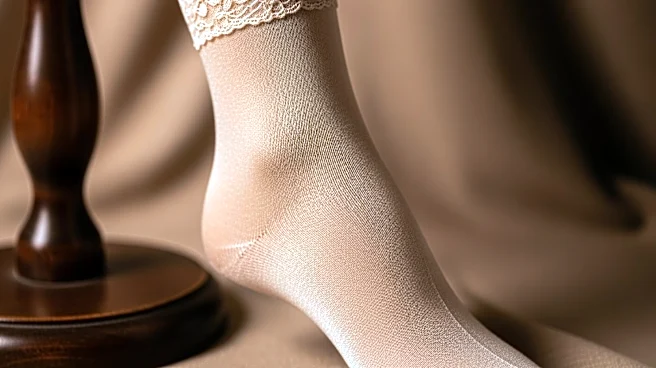






Stockings have a rich history that traces back to medieval times, evolving significantly over the centuries. Originally known as hose, these garments have transitioned from practical leg coverings to fashion statements. This article delves into the historical journey of stockings, highlighting key developments and changes in their design and use.
Early Beginnings and Medieval Hose
In medieval times, the term 'hose' was used to describe garments that covered the legs. These were typically
worn by men and were an essential part of their attire. The word 'sock' also has ancient origins, but it was the hose that dominated legwear during this period. Hose were often made from woven cloth or knitted by hand, with knitted versions being preferred for their flexibility.
By the 15th century, hose had evolved into a one-piece garment that covered the lower trunk and limbs. This design eventually split into two separate pieces: the upper-stocks, which became knee breeches, and the nether-stocks, which evolved into stockings. This separation marked a significant shift in the design and function of legwear, setting the stage for future developments.
The Rise of Knitted Stockings
The 16th century saw the introduction of knitted stockings, which quickly gained popularity due to their comfort and fit. Notably, in 1560, Thomas Gresham attempted to procure silk hose for Queen Elizabeth I, highlighting the growing demand for luxurious legwear. By the late 16th century, stockings were being made from a variety of materials, including cotton, linen, wool, and silk.
The invention of the knitting machine further revolutionized stocking production, allowing for more efficient manufacturing. This innovation made stockings more accessible and varied in design, paving the way for their widespread use. The town of Balbriggan became known for its high-quality stockings, contributing to the garment's popularity.
Stockings in the 20th Century and Beyond
The 20th century brought significant changes to the world of stockings. The introduction of nylon in 1939 by DuPont transformed the industry, offering a cheaper, more durable, and sheer alternative to silk and cotton stockings. This led to a surge in demand, with millions of pairs sold in a single day.
However, the advent of pantyhose in 1959 marked a turning point. As hemlines rose, pantyhose offered a convenient alternative to stockings, leading to a decline in their use. Despite this, stockings have maintained their place in fashion, often associated with aesthetics and style. Today, they are primarily worn for fashion purposes, complementing mid-length or short skirts and adding a touch of elegance to modern attire.