



Blind baking is a crucial technique in the world of pastry making, ensuring that pie crusts and pastries maintain their desired texture and structure. This method involves baking a pie crust or pastry without its filling, which is essential for certain types of pies and pastries. By understanding the reasons and methods behind blind baking, bakers can achieve perfectly crisp and delicious crusts every time.
Why Blind Baking is Necessary
Blind baking is often necessary when the
pie or pastry will be filled with an unbaked filling, such as pudding or cream pies. In these cases, the crust must be fully baked before the filling is added to prevent it from becoming soggy. Additionally, blind baking is used when the filling has a shorter bake time than the crust, requiring the crust to be partially baked beforehand. This technique ensures that the crust is properly cooked and maintains its structure, even when filled with wet ingredients.
Another reason for blind baking is to prevent the crust from becoming soggy due to a wet filling. By pre-baking the crust, bakers can create a barrier that keeps moisture from seeping into the pastry, preserving its texture and flavor. This is particularly important for pies with juicy fillings, where excess moisture can compromise the integrity of the crust.
Techniques for Blind Baking
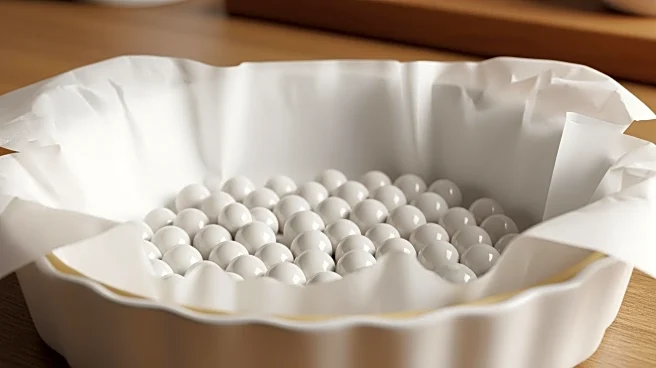
There are several methods for blind baking, each with its own advantages. One common technique involves lining the pie crust with aluminum foil or parchment paper and filling it with pastry or pie weights. These weights, which can be ceramic or metal beads, rice, dried peas, lentils, or other pulses, help the crust retain its shape while baking. For a fully baked crust, the weights are removed before the pre-baking is complete to allow the crust to brown.
Another method dispenses with weights by placing a second pie tin on top of the crust and inverting the tins to bake. This technique allows the crust to brown between the tins, ensuring even cooking. A simpler approach involves piercing the crust repeatedly with the tines of a fork to create small holes, allowing steam to escape and preventing the crust from bubbling up. However, this method is not suitable for soft doughs like pâte sucrée.
Achieving the Perfect Blind-Baked Crust
To achieve the perfect blind-baked crust, bakers must choose the right method based on the type of pastry and filling. The use of weights is ideal for maintaining the shape of the crust, while the inverted tin method can be effective for achieving even browning. Piercing the crust is a quick and easy option for firmer doughs, but may not work for softer varieties.
Ultimately, the key to successful blind baking lies in understanding the needs of the specific pastry and filling. By mastering these techniques, bakers can ensure their crusts are perfectly baked, providing a delicious foundation for any pie or pastry.