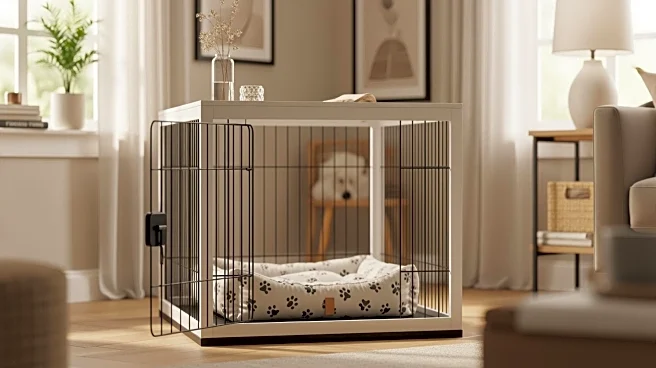

Crate training is a popular method used by pet owners to help their dogs feel secure and comfortable in a confined space. This technique is often employed to assist with housebreaking puppies and to provide
a safe haven for dogs. While some may view crate training as restrictive, when done correctly, it can offer numerous benefits for both the pet and the owner.
Understanding Crate Training
Crate training involves teaching a dog to accept a crate as a familiar and safe location. Advocates of this method often claim that dogs are "den-dwelling" animals, and a crate can serve as a substitute for a den. This approach is particularly effective when introduced properly, as most puppies can eventually tolerate and even enjoy their crate. Initially, a dog may experience stress from being confined, but with repeated exposure, this stress can transform into feelings of security, safety, and comfort.
The crate becomes the only space in the house that truly belongs to the dog, making it a personal haven. This sense of ownership can be comforting for the dog, especially in a busy household. Additionally, crate training can play a significant role in housebreaking a dog, as puppies naturally avoid soiling their sleeping area.
The Role of Crate Training in Housebreaking
One of the primary benefits of crate training is its effectiveness in housebreaking puppies. Puppies have a natural instinct to keep their sleeping area clean, which can be leveraged during crate training. By confining a puppy to a crate, owners can encourage the puppy to hold its bladder until it is taken outside. This method helps establish a routine and teaches the puppy to associate going outside with relieving itself.
However, it is important to note that young puppies cannot control their bladders for long periods. A general rule of thumb is that a puppy can hold its bladder for about one hour for every month of age. Therefore, owners must be diligent in taking their puppies outside frequently to prevent accidents and reinforce the desired behavior.
Potential Drawbacks of Crate Training
While crate training offers many benefits, it is not without potential drawbacks. Long-term or excessive confinement can lead to emotional and behavioral deterioration in dogs. It is crucial for owners to use the crate appropriately and avoid leaving their dogs confined for extended periods. Dogs need social interaction and exercise, and a crate should not be used as a substitute for these essential aspects of a dog's life.
In conclusion, crate training can be a valuable tool for pet owners when used correctly. It provides a safe space for dogs and aids in housebreaking, but it is essential to balance crate time with socialization and exercise to ensure a happy and healthy pet.