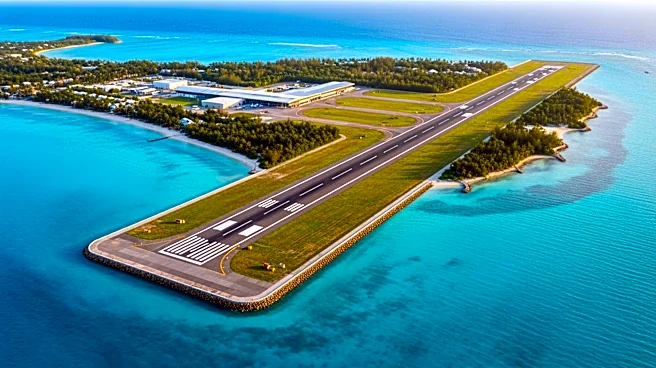








Key West International Airport serves as a vital link between the Florida Keys and the rest of the world. Located just two miles east of the main commercial center of Key West, this airport plays a crucial role in facilitating travel to and from the island. Despite its relatively short runway, Key West International Airport has a rich history and continues to be a key transportation hub for the region.
A Brief History
The aviation history of Key West dates back to 1913
when Augustin Parla made a historic flight to Cuba. In 1928, Pan American Airways began scheduled flights from Key West, marking the beginning of regular air service. During World War II, the airport's main runway was used by the U.S. Army and Navy, further establishing its importance. After the war, the city took over the airport, which eventually became Key West International Airport. Over the years, the airport has seen various airlines operate, including National Airlines, Eastern Airlines, and Delta Connection, among others.
Facilities and Operations
Key West International Airport covers 334 acres and features a single runway, 09/27, which is 5,076 feet long. The runway's length limits the size of aircraft that can serve the airport, with the largest being the Airbus A319 and Boeing 737-700. The airport's terminal has undergone several expansions, with the most recent addition being a new passenger concourse set to open in 2025. This concourse will feature eight jet bridges and is designed to withstand hurricane-force winds, reflecting the airport's commitment to safety and modernization.
Connecting the Keys
Despite its size limitations, Key West International Airport handles a significant amount of passenger traffic. In recent years, the airport has seen a steady increase in passenger numbers, with over 1.4 million passengers in 2022. The airport offers flights to several major destinations, including Miami, Atlanta, and Charlotte, making it a convenient gateway for travelers visiting the Florida Keys. The airport's strategic location and modern facilities ensure that it remains a vital part of the region's transportation infrastructure.
Key West International Airport continues to play a crucial role in connecting the Florida Keys to the rest of the world. With its rich history, modern facilities, and strategic location, the airport is well-positioned to meet the needs of travelers and support the region's tourism industry. As the airport continues to evolve, it remains a key gateway to the unique and vibrant destination of Key West.