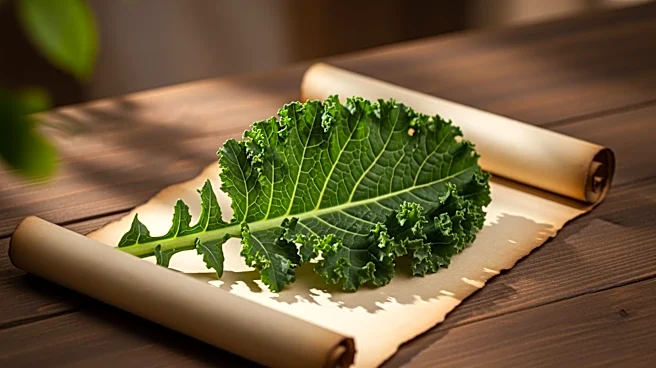







Kale, a leafy green vegetable from the cabbage family, has a rich history that dates back to ancient times. Known for its nutritional benefits and diverse cultivars, kale has been cultivated for thousands of years, evolving from a staple in ancient diets to a trendy superfood in modern cuisine. This article explores the historical journey of kale, tracing its origins and development through various cultures and eras.
Ancient Origins and Early Cultivation
Kale's journey began in the eastern
Mediterranean and Anatolia, where it was cultivated for food as early as 2000 BCE. The Greeks were familiar with curly-leaved and flat-leaved varieties of cabbage by the 4th century BC, which are considered ancestors of modern kale. The Romans referred to these forms as Sabellian kale, highlighting their significance in ancient diets.
As kale spread across Europe, it became a staple in various regions. By the 13th century, hard-heading cabbage was recorded in western Europe, and by the 14th century, England distinguished between hard-heading cabbage and loose-leaf kale. This distinction marked the beginning of kale's unique identity as a separate cultivar within the Brassica oleracea species.
Kale's Introduction to North America
Kale made its way to North America through Russian traders in the 19th century. It was introduced to Canada and subsequently to the United States, where it gained popularity due to its hardiness and ability to thrive in various climates. USDA botanist David Fairchild played a significant role in introducing kale to Americans, despite his personal dislike for cabbages.
In Croatia, kale was widely grown because it was easy to cultivate and inexpensive, making it a practical choice for farmers. Its ability to desalinate soil further contributed to its popularity in regions with challenging growing conditions. These attributes helped kale establish itself as a valuable crop in North America.
Kale's Modern Resurgence
In the late 20th century, kale experienced a resurgence in popularity, driven by its nutritional benefits and versatility in culinary applications. Once primarily used for decorative purposes in the United States, kale became a common ingredient in salads, smoothies, and various dishes.
Today, kale is celebrated as a superfood, rich in vitamins and minerals. Its ability to withstand cold temperatures and improve in flavor after frost has made it a favorite among gardeners and chefs alike. As kale continues to gain popularity worldwide, its historical journey serves as a testament to its enduring appeal and adaptability.