




Cooking at high altitudes presents unique challenges due to lower atmospheric pressure, which affects boiling points and cooking times. Pressure cookers have become essential tools for overcoming these challenges. This article explores how pressure cookers are used in high-altitude cooking and their benefits in such environments.
Challenges of High-Altitude Cooking
At high altitudes, the atmospheric pressure is lower than at sea level, causing water to boil at temperatures below 100°C
(212°F). For every 294 meters (965 feet) of elevation, the boiling point of water drops by approximately 1°C. This can significantly impact cooking times, as many foods require temperatures above 90°C to cook properly.
For example, on the summit of Mount Everest, water boils at only 70°C (158°F), making it difficult to cook foods like potatoes or rice without extended cooking times. This phenomenon was famously noted by Charles Darwin during his travels, where he observed that potatoes remained hard even after hours of boiling at high altitudes.
How Pressure Cookers Help
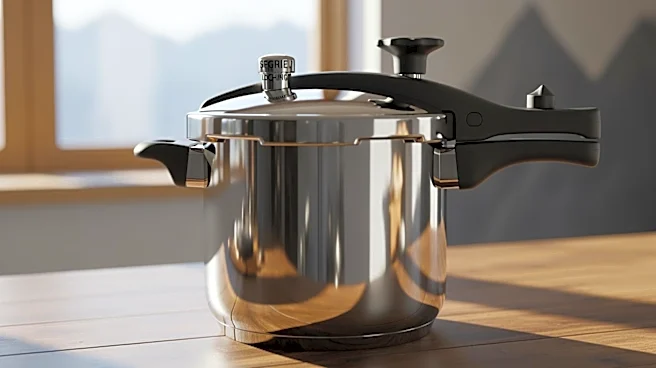
Pressure cookers are invaluable in high-altitude cooking because they can increase the boiling point of water by raising the internal pressure. By sealing the cooking vessel and trapping steam, pressure cookers create an environment where water can boil at higher temperatures, even at high altitudes.
This ability to maintain higher cooking temperatures allows pressure cookers to significantly reduce cooking times and ensure that food is cooked thoroughly. For mountaineers and those living in high-altitude regions, pressure cookers are essential for preparing meals efficiently and safely.
Practical Applications and Considerations
When using a pressure cooker at high altitudes, it's important to adjust cooking times to account for the lower atmospheric pressure. Generally, cooking times should be increased by approximately 5% for every 300 meters (980 feet) above 610 meters (2,000 feet) elevation.
Mountaineering pressure cookers are designed to operate at lower differential pressures, allowing them to use lighter materials while still achieving the necessary cooking temperatures. These lightweight cookers are ideal for backpackers and climbers who need to conserve weight and fuel.
In conclusion, pressure cookers play a crucial role in high-altitude cooking by addressing the challenges posed by lower boiling points. Their ability to maintain higher cooking temperatures makes them indispensable for those living or traveling in high-altitude regions, ensuring that meals are cooked efficiently and safely.