



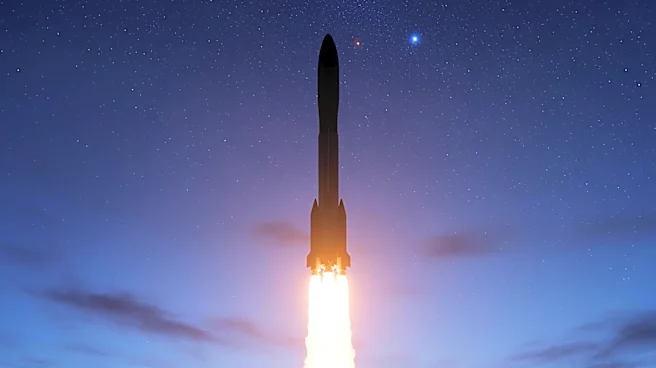


Project Mercury was the United States' first human spaceflight program, aiming to send an astronaut into orbit and return them safely. The Mercury-Redstone 3 mission, also known as Freedom 7, was a pivotal moment in this ambitious project. Launched on May 5, 1961, it marked the first U.S. human spaceflight, piloted by astronaut Alan Shepard. This article explores the development of Project Mercury and its culmination in the historic Mercury-Redstone 3 mission.
The Goals of Project Mercury
Project Mercury was initiated with the goal of achieving human spaceflight and demonstrating the United States' capabilities in space exploration. The project aimed to put an astronaut into orbit around the Earth and safely return them, a significant challenge at the time. The program involved extensive research and development to ensure the safety and success of the missions.
The Mercury spacecraft, developed by McDonnell Aircraft Corporation, was designed to carry a single astronaut. It featured a heat shield to protect against the intense heat of re-entry and an attitude control system for maneuvering in space. The Mercury-Redstone Launch Vehicle, used for the suborbital flights, was a modified version of the Redstone missile, adapted for human spaceflight.
The Path to Mercury-Redstone 3
The journey to Mercury-Redstone 3 involved several test flights and extensive preparations. The spacecraft for the mission, Mercury capsule #7, required significant development and testing before it was deemed safe for flight. Concerns about the safety of the Redstone launch vehicle, especially after issues during the MR-2 test flight, led to additional testing and modifications.
The MR-BD test flight, conducted to ensure the booster was ready for the crewed mission, was a critical step in the preparation process. Alan Shepard was selected as the primary pilot for the mission, with John Glenn and Gus Grissom as backups. The selection process and training were rigorous, reflecting the high stakes of the mission.
The Impact of Mercury-Redstone 3
The successful launch of Mercury-Redstone 3 was a significant achievement for Project Mercury and the U.S. space program. It demonstrated the feasibility of human spaceflight and set the stage for future orbital missions. The mission's success was a testament to the dedication and expertise of the engineers, scientists, and astronauts involved in Project Mercury.
Mercury-Redstone 3 also established traditions that would continue in future missions, such as the naming of spacecraft by astronauts. The mission's success inspired confidence in the U.S. space program and contributed to the nation's efforts in the space race. Today, Project Mercury is remembered as a pioneering effort in human space exploration, with Mercury-Redstone 3 as one of its crowning achievements.