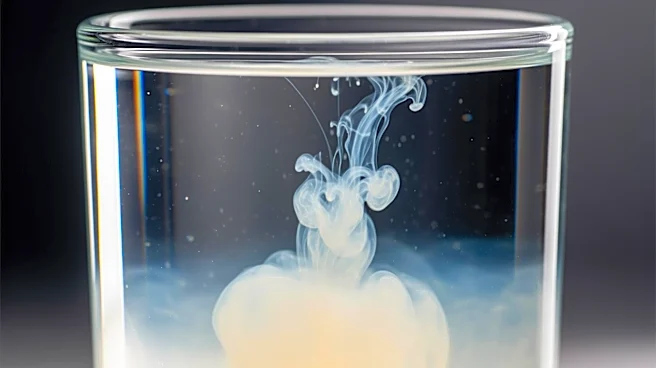






The ouzo effect, also known as the louche effect, is a captivating phenomenon that occurs when water is added to anise-flavored liqueurs like ouzo, pastis, and absinthe. This process results in the formation of a milky oil-in-water emulsion, which is both visually striking and scientifically intriguing. The ouzo effect is notable for its ability to create stable emulsions with minimal mixing, a property that has potential applications in various industries.
Understanding the Ouzo Effect
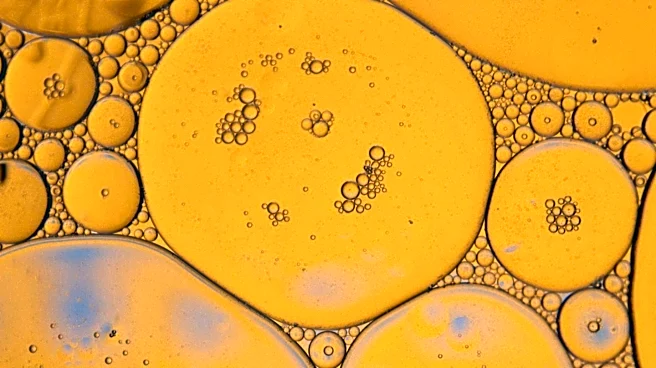
The ouzo effect begins with a hydrophobic essential oil, such as trans-anethole, which is dissolved in a water-miscible solvent like ethanol. When water is added, the concentration of ethanol decreases, causing the hydrophobic substance to precipitate and form an emulsion with the remaining ethanol-water mixture. This emulsion scatters light, giving the mixture its characteristic milky appearance.
Typically, oil-in-water emulsions are unstable, with oil droplets coalescing until complete phase separation occurs. However, the ouzo effect defies this norm by creating a stable emulsion without the need for surfactants or mechanical agitation. This stability is achieved through liquid-liquid nucleation, where droplet coalescence is significantly slowed.
The Science Behind Stability
The stability of the ouzo effect emulsion is a result of complex interactions within the mixture. Using techniques like small-angle neutron scattering, researchers have found that the droplets in the emulsion are on the order of a micron in size. Dynamic light scattering studies have shown that these droplets grow by Ostwald ripening, a process where larger droplets grow at the expense of smaller ones.
Interestingly, the rate of Ostwald ripening diminishes with increasing ethanol concentrations, leading to a stabilization of droplet size at an average diameter of three microns. The stability of the emulsion is thought to derive from thermodynamic considerations, specifically the trapping of the mixture between the binodal and spinodal curves in the phase diagram.
Potential Applications of the Ouzo Effect
The unique properties of the ouzo effect have sparked interest in its potential applications. Emulsions are widely used in the production of food products, detergents, and body-care items, where stability is crucial. The ouzo effect offers a method for generating surfactant-free emulsions, which could reduce costs in large-scale production processes.
Additionally, the ouzo effect has been utilized in the creation of various dispersions, such as pseudolatexes, silicone emulsions, and biodegradable polymeric nanocapsules. These nanoparticles are thought to be kinetically stabilized, offering a different approach compared to traditional surfactant-based methods. While the exact mechanisms behind the ouzo effect remain partially understood, its potential for innovation in emulsion technology is undeniable.