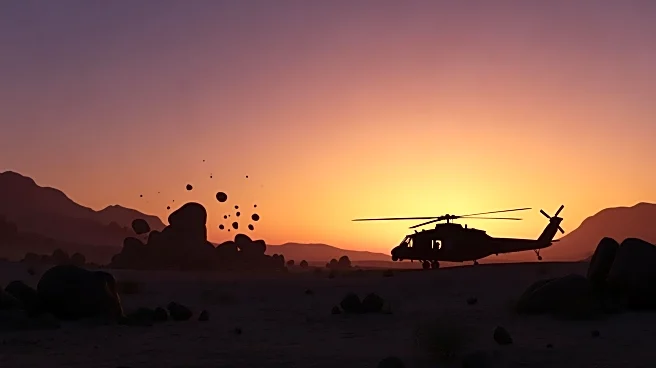

Operation Eagle Claw was a daring military mission undertaken by the United States in an attempt to rescue 52 American hostages held in Tehran during the Iran hostage crisis. This operation, which took
place on April 24, 1980, ended in failure and had significant repercussions for the U.S. government and its military strategy. This article examines the details of the operation and its impact on the hostage crisis.
Planning and Execution
The planning for Operation Eagle Claw began shortly after the hostages were taken. The mission was complex, involving multiple branches of the U.S. military, including the Army, Navy, Air Force, and Marine Corps. The plan was to use helicopters and C-130 aircraft to transport Delta Force troops to a desert staging area in Iran, known as Desert One. From there, the helicopters would fly the troops to a location near Tehran, where they would launch a rescue raid on the U.S. Embassy.
However, the operation encountered numerous obstacles. Of the eight helicopters sent to Desert One, only five arrived in operational condition. Mechanical failures and a sandstorm, known as a haboob, further complicated the mission. The decision was made to abort the operation when it became clear that the remaining helicopters were insufficient to carry out the rescue.
The Tragic Outcome
As the U.S. forces prepared to withdraw from Desert One, a tragic accident occurred. One of the helicopters collided with a transport aircraft, resulting in a fire that destroyed both aircraft and killed eight servicemen. This disaster marked the end of Operation Eagle Claw and was a significant blow to the Carter administration.
The failure of the mission had far-reaching consequences. It highlighted the challenges of coordinating a complex military operation and exposed weaknesses in the U.S. military's ability to conduct special operations. The incident also contributed to a loss of confidence in President Jimmy Carter's leadership, which was already under scrutiny due to the prolonged hostage crisis.
Legacy and Lessons Learned
In the aftermath of Operation Eagle Claw, the U.S. military underwent significant changes. The failure of the mission led to the establishment of the United States Special Operations Command (USSOCOM) to improve coordination and effectiveness in special operations. Additionally, the 160th Special Operations Aviation Regiment, known as the Night Stalkers, was created to provide specialized helicopter support for such missions.
Operation Eagle Claw remains a pivotal moment in U.S. military history. It underscored the importance of thorough planning and coordination in complex operations and served as a catalyst for improvements in special operations capabilities. Despite its failure, the mission provided valuable lessons that have shaped U.S. military strategy in the years since.