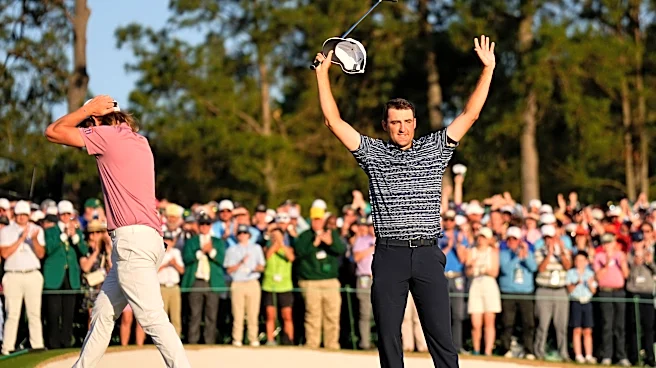







The 1968 Masters Tournament is remembered not just for the skill displayed on the greens but for a controversy that overshadowed the event. Bob Goalby emerged as the winner, but his victory was marred by an error on Roberto De Vicenzo's scorecard. This incident has become one of the most talked-about moments in golf history, highlighting the importance of accuracy and attention to detail in the sport.
The Error That Changed the Outcome
The final round of the 1968 Masters Tournament
was a nail-biter, with Bob Goalby and Roberto De Vicenzo neck and neck. Goalby played an impressive back nine, birdying the 13th and 14th holes and eagling the 15th, finishing with a score of 66 for a total of 277. Meanwhile, De Vicenzo, the reigning British Open champion, was also performing well. However, a mistake on his scorecard would cost him dearly.
De Vicenzo's playing partner, Tommy Aaron, mistakenly recorded a par 4 for De Vicenzo on the 17th hole, where he had actually made a birdie 3. De Vicenzo failed to notice the error and signed the incorrect scorecard. According to USGA rules, the higher score must stand, which meant De Vicenzo's score was recorded as 278, one stroke behind Goalby.
The Aftermath and Public Reaction
The error meant that instead of a playoff, Goalby was declared the winner. De Vicenzo's reaction was one of regret, famously stating, "What a stupid I am." The incident received extraordinary media attention, and the rules of golf were scrutinized by the public. Many felt sympathy for De Vicenzo, who had lost the chance to compete for the title due to a simple oversight.
Despite the controversy, Goalby was not at fault. He had played a remarkable game and corrected a scoring error he had made for his playing partner, Raymond Floyd, at the scorer's table. This incident led to changes in the tournament's procedures, including the introduction of a scoring tent in subsequent years to prevent similar mistakes.
Legacy of the 1968 Masters Tournament
The 1968 Masters Tournament remains a significant event in golf history, not only for the controversy but also for the performances of other players. Jack Nicklaus tied for fifth place, and Gary Player, the third-round leader, finished tied for seventh. Lee Trevino made his Masters debut, and although he struggled in the final round, he went on to win the U.S. Open two months later.
The tournament highlighted the importance of precision in golf and led to procedural changes to ensure accuracy in scoring. It also demonstrated the unpredictable nature of sports, where a single mistake can alter the course of history. The incident between Goalby and De Vicenzo is a reminder of the human element in sports, where even the best players can fall victim to simple errors.