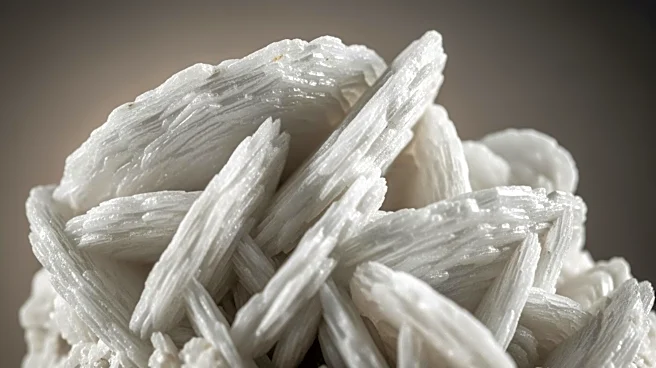





Kaolinite, the primary mineral component of kaolin, is a layered silicate mineral with a unique chemical composition and structure. These properties make it a valuable material in various industrial applications. This article explores the chemical and structural characteristics of kaolinite, shedding light on what makes it so versatile.
Chemical Composition of Kaolinite
Kaolinite is a dioctahedral phyllosilicate clay mineral with the chemical formula Al2Si2O5(OH)4. This formula indicates
that kaolinite is composed of aluminum, silicon, oxygen, and hydroxyl ions. In ceramics applications, the formula is often expressed in terms of oxides: Al2O3·2SiO2·2H2O. This composition is responsible for kaolinite's stability and its ability to withstand high temperatures without decomposing.
The presence of hydroxyl ions in kaolinite's structure is a key factor in its properties. These ions contribute to the mineral's low shrink-swell capacity and low cation-exchange capacity, making it less reactive compared to other clay minerals. This stability is one of the reasons kaolinite is favored in industries that require materials with consistent performance under varying conditions.
Structural Characteristics of Kaolinite
Kaolinite's structure is characterized by its layered arrangement, consisting of one tetrahedral sheet of silicate tetrahedra (SiO4) linked to one octahedral sheet of aluminate octahedrons (AlO2(OH)4). These sheets are bonded together through shared oxygen atoms and hydrogen bonds, forming a stable and rigid structure.
The layers in kaolinite are held together by hydrogen bonds, which prevent water molecules from infiltrating between them. This characteristic accounts for kaolinite's nonswelling nature, distinguishing it from other clay minerals that expand when exposed to moisture. The lack of large cations between the layers also contributes to its low ion exchange capacity.
Industrial Implications
The chemical and structural properties of kaolinite have significant implications for its industrial use. In the ceramics industry, kaolinite's stability and high melting point make it an ideal component for producing durable and heat-resistant products. Its low reactivity and nonswelling nature are advantageous in applications where dimensional stability is crucial.
In the paper industry, kaolinite's fine particle size and chemical inertness enhance the quality of paper products by improving brightness and printability. Its ability to form a smooth, glossy surface is particularly valued in high-end printing applications.
Overall, the unique chemical and structural properties of kaolinite make it a versatile and valuable mineral in various industrial sectors. Its consistent performance and stability under different conditions ensure its continued demand in the global market.