



Death Valley, located in Eastern California, is a geographical wonder known for its extreme conditions and unique formations. As part of the Mojave Desert, it is one of the hottest places on Earth, featuring a landscape that is both harsh and beautiful. This article delves into the geographical features that make Death Valley a fascinating subject of study and a popular destination for adventurers and scientists alike.
The Valley's Unique Topography
Death Valley is a desert valley
that lies mostly in Inyo County, California, near the border of California and Nevada. It is part of the Great Basin and is bordered by the Sierra Nevada mountains to the west. The valley runs from north to south between the Amargosa Range on the east and the Panamint Range on the west. The Grapevine Mountains and the Owlshead Mountains form its northern and southern boundaries, respectively. This unique positioning contributes to its extreme climate and diverse geological features.
The valley's lowest point is Badwater Basin, which sits at 282 feet below sea level, making it the lowest point in North America. In contrast, the highest point in Death Valley National Park is Telescope Peak, located in the Panamint Range, with an elevation of 11,043 feet. This dramatic elevation change within a relatively short distance is one of the most striking aspects of Death Valley's geography.
Geological Formations and Features
Death Valley is a graben, a block of land that has dropped between two mountain ranges due to faulting. This geological feature is part of the larger Walker Lane, a trough that extends north to Oregon. The valley is bisected by a right lateral strike-slip fault system, which includes the Death Valley Fault and the Furnace Creek Fault. These geological processes have shaped the valley over millions of years, creating its current landscape.
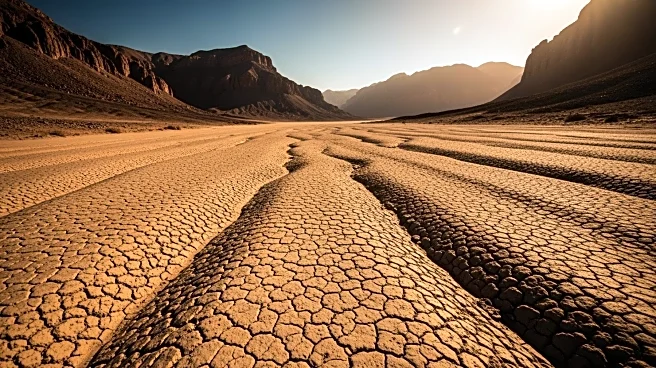
The valley also contains salt pans, remnants of ancient lakes that once filled the area. During the Pleistocene era, an inland lake known as Lake Manly covered much of Death Valley. As the climate changed and the area became more arid, the lake evaporated, leaving behind vast salt flats. These salt flats are a defining feature of the valley, contributing to its stark, otherworldly appearance.
Climate and Environmental Impact
Death Valley's climate is characterized by extreme heat and aridity, with long, hot summers and short, warm winters. The valley is extremely dry due to its location in the rain shadow of four major mountain ranges, including the Sierra Nevada. As moist air moves inland from the Pacific Ocean, it loses moisture as it rises over these mountains, leaving little precipitation for Death Valley.
The valley's extreme heat is a result of several factors, including intense solar heating, the trapping of warm air by high valley walls, and the migration of warm air from surrounding desert regions. These conditions create a harsh environment that challenges both plant and animal life. Despite this, Death Valley is home to a surprising diversity of species, many of which have adapted to survive in this extreme environment.
In conclusion, Death Valley's unique geographical features and extreme climate make it a place of both scientific interest and natural beauty. Its dramatic landscapes and challenging conditions continue to captivate those who visit and study this remarkable desert valley.