







The offside rule in soccer is one of the most contentious and debated aspects of the game. While it plays a crucial role in maintaining fairness and balance, it also presents significant challenges for players, officials, and fans. The rule's complexity and the split-second decisions required to enforce it often lead to controversies and heated debates. This article explores the challenges and controversies associated with the offside rule in soccer.
The Complexity of Offside Decisions
One of the primary challenges of the offside rule is its complexity. Determining whether a player is in an offside position requires precise judgment of player positions at the moment the ball is played. This task is made more difficult by the fast-paced nature of the game and the need for split-second decisions.
Assistant referees, who are responsible for signaling offside offenses, must keep track of multiple players and the ball simultaneously. The foreshortening effect, where the distance between players appears different from the assistant referee's perspective, can lead to errors in judgment. As a result, offside decisions are often a matter of inches, leading to disputes and controversies.
Technological Solutions and Their Limitations
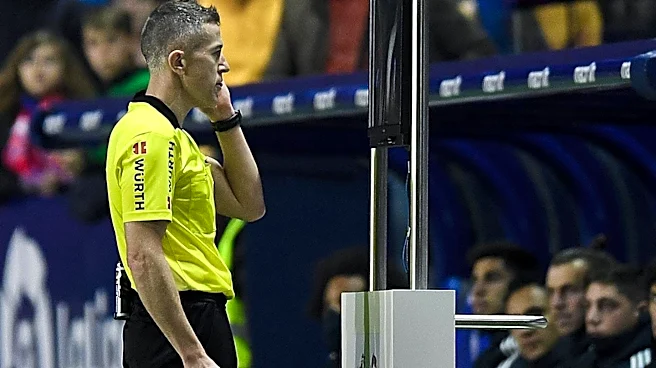
To address the challenges of enforcing the offside rule, soccer has increasingly turned to technology. Video Assistant Referees (VAR) and Semi-Automated Offside Technology (SAOT) have been introduced to assist officials in making accurate offside decisions. These technologies use high-speed cameras and virtual replays to determine player positions at the moment the ball is played.
While technology has improved the accuracy of offside decisions, it is not without its limitations. The use of VAR has been criticized for disrupting the flow of the game and leading to lengthy delays. Additionally, the reliance on technology has sparked debates about the human element of officiating and whether technology should play such a significant role in decision-making.
The Impact on Players and Fans
The offside rule also impacts players and fans, contributing to the drama and excitement of the game. For players, timing runs and passes to avoid being caught offside is a critical skill. However, the rule can also be a source of frustration, as goals are disallowed due to marginal offside calls.
For fans, offside decisions can be a source of controversy and debate. The anticipation of a goal being scored, only to be disallowed due to an offside call, adds to the emotional rollercoaster of watching a soccer match. While the offside rule is essential for maintaining fairness, its complexity and the controversies it generates continue to be a topic of discussion in the soccer world.