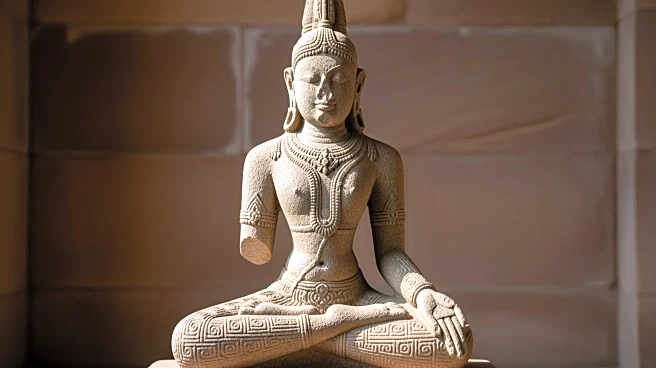




Yoga is not just a physical practice but a profound philosophical system that has significantly influenced Indian religious and philosophical traditions. From its early mentions in ancient texts to its integration into various schools of thought, yoga has played a pivotal role in shaping the spiritual landscape of India. This article explores yoga's impact on Hinduism, Buddhism, and Jainism.
Yoga in Hindu Philosophy
In Hinduism, yoga is deeply intertwined with the pursuit
of spiritual knowledge and liberation. The Yoga Sutras of Patanjali, a foundational text, outlines a systematic approach to achieving spiritual liberation through meditation and ethical practices. This text is considered a cornerstone of classical yoga, emphasizing the control of the mind and senses to attain a state of pure awareness.
Hindu philosophy also includes various forms of yoga, such as jnana yoga (the yoga of knowledge), bhakti yoga (the yoga of devotion), and karma yoga (the yoga of action). These practices are aimed at realizing the unity of the individual self with the universal consciousness, or Brahman. The Bhagavad Gita, a key Hindu scripture, elaborates on these forms of yoga, presenting them as paths to spiritual enlightenment.
Buddhist and Jain Contributions
Buddhism and Jainism, two major Indian religions, have also been influenced by yoga. Early Buddhist texts describe meditative practices that align with yogic techniques, focusing on mindfulness and the cessation of suffering. The Yogācāra school of Mahayana Buddhism, in particular, developed a systematic framework for yogic practices aimed at achieving enlightenment.
Jainism, with its emphasis on nonviolence and self-discipline, incorporates yoga as a means to purify the self and attain liberation from the cycle of rebirth. Jain texts describe yoga as the sum of all activities of mind, speech, and body, highlighting its role in the path to spiritual liberation. The cross-fertilization between Jain and Hindu yoga traditions is evident in the similarities between their ethical precepts and practices.
Cross-Cultural Influences and Integration
The integration of yoga into these philosophical traditions reflects a broader cultural exchange within ancient India. The ascetic practices and meditative techniques of yoga were adopted and adapted by different schools of thought, leading to a rich tapestry of spiritual practices. This cross-cultural influence is evident in the shared concepts and goals of liberation and self-realization across these traditions.
Yoga's influence on Indian philosophy is profound, offering a diverse array of practices and teachings that continue to inspire spiritual seekers. Its integration into Hinduism, Buddhism, and Jainism highlights yoga's enduring legacy as a path to spiritual growth and enlightenment.