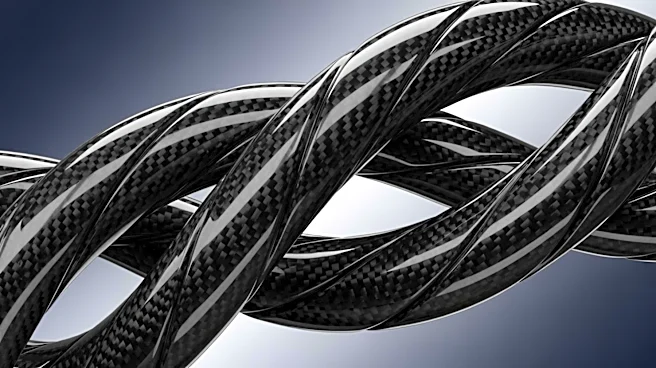







Carbon fiber-reinforced polymers (CFRPs) have become a cornerstone in modern engineering and manufacturing, known for their exceptional strength-to-weight ratio and rigidity. These composite materials, which consist of carbon fibers embedded in a polymer matrix, have evolved significantly since their inception, driven by technological advancements and increasing demand across various industries.
Early Developments
The journey of CFRPs began with the development of carbon
fibers themselves. Initially, carbon fibers were produced by heating rayon until it carbonized, a process that was inefficient and resulted in fibers with low carbon content. It wasn't until the early 1960s that a more effective method was developed using polyacrylonitrile (PAN) as a precursor, which significantly improved the carbon content and strength of the fibers.
The high potential strength of carbon fibers was realized in the 1960s, leading to their use in aerospace applications. The Royal Aircraft Establishment in the UK played a pivotal role in developing carbon fibers with high tensile strength, which were later used in Rolls-Royce jet engines. This marked the beginning of carbon fibers being used as reinforcement in composite materials.
Technological Advancements
As the demand for lightweight and strong materials grew, so did the technology behind CFRPs. The manufacturing process of CFRPs involves layering sheets of carbon fiber cloth into molds, which are then filled with epoxy and cured. This process has evolved to include techniques such as vacuum bagging and autoclave curing, which help eliminate air bubbles and improve the material's strength.
The introduction of carbon nanotube-reinforced polymers (CNRPs) further enhanced the properties of CFRPs. These materials, used in advanced aerospace applications like the Lockheed Martin F-35 Lightning II, offer even greater strength and toughness compared to traditional CFRPs. The binding matrix in CNRPs is filled with carbon nanotubes, providing superior mechanical properties.
Modern Applications
Today, CFRPs are used extensively in industries such as aerospace, automotive, and sports equipment. The Airbus A350 XWB, for example, is composed of 53% CFRP, showcasing the material's importance in reducing weight and improving fuel efficiency. In the automotive industry, CFRPs are used in high-performance vehicles to enhance speed and agility.
The versatility of CFRPs has also led to their use in civil engineering, where they are employed to strengthen existing structures and as an alternative to steel reinforcement. Despite their high cost, the benefits of CFRPs continue to drive innovation and adoption across various fields, solidifying their role as a key material in modern engineering.